

Nigerians are groaning over multiple road taxes they are being forced to pay despite the position of the Federal Government.
It will be recalled that the FG declared a ban on road taxes, but this does not appear to reflect the reality for many citizens across the country.
A tricycle (keke) rider, Obidient Peter, known as @Onihax on X, who operates between Lagos and Ogun states, on Wednesday evening shared a post expressing his grievances over the multiple road taxes he is compelled to pay.
His post counters the viral advice of buying a ₦5 million tricycle to “triple your money in six months” by detailing frequent repairs, weekly hire-purchase payments of ₦60,000–₦70,000, multiple union stickers, and task force extortion, which turn the venture into a struggle for survival rather than easy profit.
@Onihax shared his firsthand experience, revealing daily costs such as ₦1,300–₦1,700 for tickets, over ₦1,000 in markers/chairman/security fees, police bribes, and about ₦12,000 for fuel, all of which drastically reduce the claimed ₦200,000 daily earnings.
He stressed that systemic issues in Nigeria’s informal transport sector drain operators before they can grow, urging respect for road workers. According to him, experience shows that the hustle involves constant pressure, mental stress, and little support beyond personal effort.
“Everybody likes to talk from the outside until you enter the road. I am a keke rider myself, and from experience, no, it is not that easy. This idea of ‘buy keke for ₦5 million and make ₦200,000 daily’ sounds appealing online, but the reality on the ground is very different,” he said.
“I operate interstate between Lagos and Ogun (I can’t mention the exact location for security reasons), so let me break it down: In Lagos alone, the main ticket is ₦1,300; money for markers, chairman, security, etc., is about ₦1,000; police or agency payments (LASTMA, LNSC, etc.) vary, but you must settle or risk paying ₦2,000–₦10,000 for an ‘offence’. That is already money gone before you even start working.
“Now, on the Ogun side: the main ticket is ₦1,700 (₦1,300 on weekends); ‘King of Boys’ fee is ₦200; other random levies are about ₦500; then fuel costs at least ₦12,000 daily. Passengers will still bargain as if fuel costs ₦200 per litre.
“We have not even talked about repairs, feeding, and daily survival. Weekly hire-purchase payments range from ₦60,000 to ₦70,000 for almost two years. Let me add this: once a new keke hits six months, problems start coming one after another. So when everything is deducted, what exactly is left?
“This job is not ‘wake up and print money.’ It is survival, patience, and constant expenses. So if someone is still struggling financially, it is not always laziness or a lack of ambition. Sometimes, it is because the system itself is designed to drain you before you can grow. Respect people on the road—the hustle is deeper than it looks.”
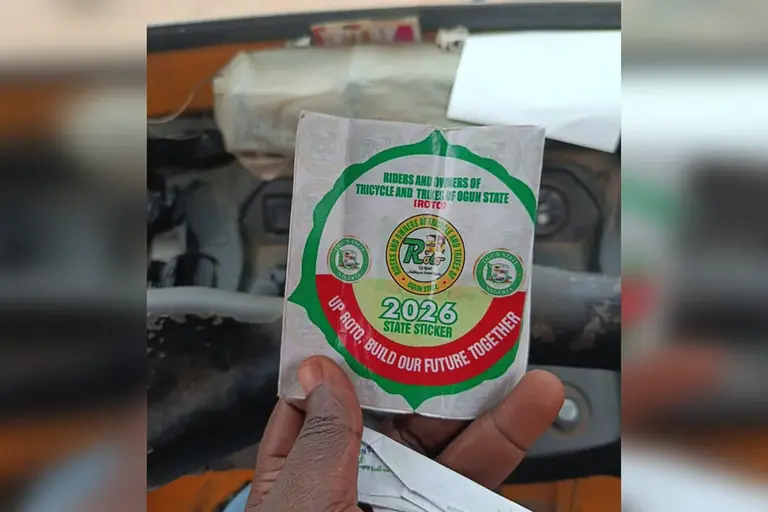
Speaking further, he noted that keke riders are forced to buy multiple “compulsory” stickers annually. In Lagos alone, these include local government, state, and zonal stickers, depending on the park.
@Onihax lamented that these stickers cost operators over ₦10,000, including ID cards.
“No sticker means you could pay ₦10,000 anytime you are stopped. Ogun State is even worse—three different unions, three different stickers, plus a Hackney permit. Miss the January deadline and prices double. Same road, same keke, different payments from every angle. This is not regulation; this is survival under pressure,” he said.
Another keke rider, Victor Chimela, who operates in Calabar, Cross River State, added: “Come to Calabar and see the worst of it. Even though the governor intervened, task forces are still carrying out illegal activities. In Calabar alone, to move from Municipal to Calabar South, you must buy their ticket.”
Ugochukwu Nwoke added: “Road agberos are a plague that must be addressed as the country undergoes the reforms it needs.”