


Nigeria’s long-running electricity metering crisis is heading into a fresh institutional clash, with the Federal Government and electricity distribution companies (DisCos) trading blame over millions of unused prepaid meters.
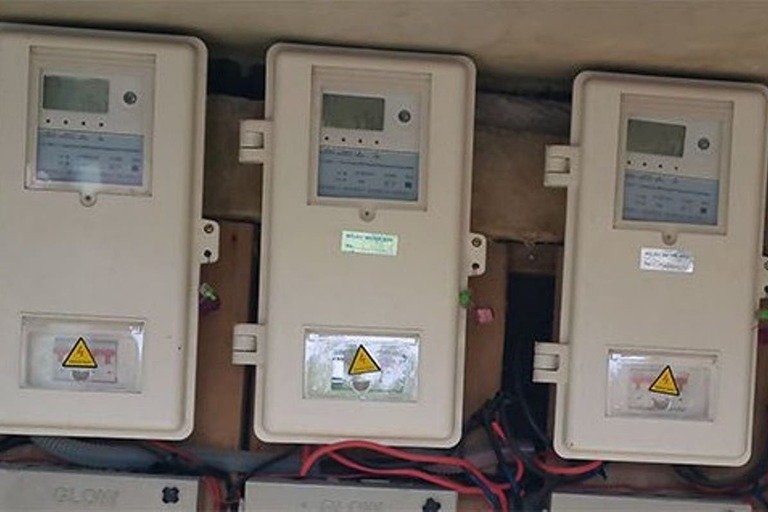
At the heart of the dispute are meters procured under the National Mass Metering Programme (NMMP) and the President Power Initiative, backed by the World Bank and public funds. Designed to close Nigeria’s estimated seven million metering gap, the intervention was meant to finally curb estimated billing — a practice that has fuelled public anger and eroded trust in the power sector.
Instead, deployment has stalled
Power Minister Adebayo Adelabu revealed that just about 150,000 meters have been installed out of an initial one million already procured. With more batches expected, the government warns that as many as 2.5 million meters could be sitting idle in warehouses by the end of 2026.
The Federal Government, which owns roughly 40 per cent of the DisCos and has board representation, has squarely blamed the companies for the delays. According to Adelabu, distributors have failed to provide accurate customer data and adequate logistical support to installers, making large-scale deployment impossible.
The intervention, the ministry said, became necessary after years of underperformance by DisCos, which are legally responsible for metering customers. Under the World Bank–funded Distribution Sector Recovery Programme, the government procured meters directly, embedding installation costs to ensure consumers pay nothing.
Each meter is customised for a specific DisCo, meaning it cannot be transferred across franchise areas. Suppliers and installers have already been fully paid, yet meters continue to pile up.
Officials say poor enumeration remains a major obstacle, with installers frequently sent to wrong addresses or premises unfit for immediate installation. In some cases, fewer than four in ten surveyed locations are viable.
Despite repeated meetings involving the Ministry of Power, the World Bank and procurement teams, progress remains sluggish. With another 1.5 million meters expected under ongoing initiatives, including the Presidential Metering Initiative, the gap between supply and installation is widening.
Adelabu insists ending estimated billing is non-negotiable and says the government is ready to intervene more forcefully, including helping DisCos clean up customer data to accelerate deployment.
DisCos push back
DisCos, however, reject claims that they are deliberately frustrating the programme. A senior official at a northern utility argued that the real problem lies with contractor capacity and weak logistics.
According to the official, while 109,251 meters were contracted for the utility, fewer than half were delivered. Of the roughly 49,000 supplied, about 33,000 have already been installed, leaving just 16,000 in storage.
The official said installations have picked up, averaging 800 meters daily, but warned that current stock would be exhausted within weeks unless fresh deliveries arrive.
He also dismissed allegations of poor Know Your Customer (KYC) data, blaming instead the use of a single installer across multiple states, often without vehicles or adequate funding. Installers, he said, rely on motorcycles and tricycles and are poorly paid, discouraging thorough pre-installation checks.
A southern DisCo, meanwhile, said it had not received a single meter under the DISREP programme, describing claims of hoarding as unfounded.
At the regulatory level, a source at the Nigerian Electricity Regulatory Commission (NERC) suggested some DisCos prefer cash allocations to procure meters themselves, citing past disputes during earlier mass metering schemes.
The Association of Nigerian Electricity Distributors (ANED) has also rejected allegations of sabotage, insisting DisCos want customers metered and have no incentive to block free installations.
Deeper governance flaws
Energy experts say the standoff exposes deeper structural weaknesses in Nigeria’s power sector.
Energy economist Prof Adeola Adenikinju argues the problem lies less in policy design and more in enforcement. He called for sanctions against defaulting DisCos and greater empowerment of third-party installers to accelerate metering.
Similarly, Prof Wunmi Iledare described the crisis as a symptom of weak regulation and a pseudo-monopoly market structure. He questioned why NERC has been reluctant to enforce penalties, warning that continued reliance on estimated billing undermines fairness, transparency and consumer confidence.
Civil society groups have rallied behind the power minister, accusing some DisCos of still demanding illegal installation fees of up to N350,000 despite assurances that meters are free. The Nigerian Human Rights Community has threatened mass action, citing widespread consumer exploitation.
Former Chartered Institute of Bankers of Nigeria president, Prof Segun Ajibola, added that prepaid metering threatens what he called “undeserved revenue” from estimated billing, explaining the resistance. He urged the government to “wield the big stick” or risk leaving consumers permanently exposed.
More than a decade after power sector privatisation, millions of Nigerians remain trapped on estimated billing — a reminder that without firm enforcement and accountability, even free meters may never reach the homes they were meant for.