

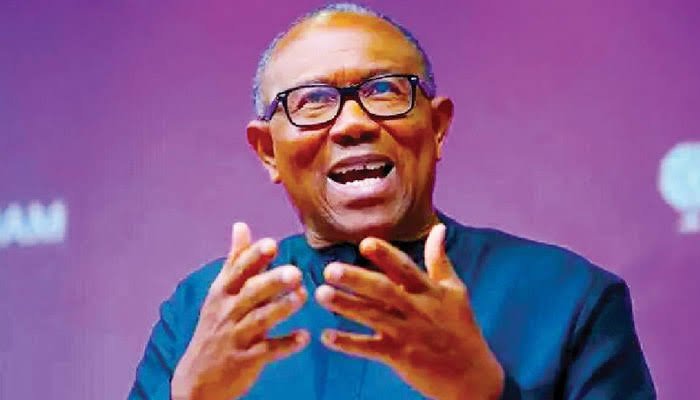
Peter Obi, the Labour Party’s presidential candidate in the 2023 election, urged Nigerians, particularly leaders, to prioritise the welfare and future of the country’s children, whom he described as “the heartbeat of our nation and bearer of our collective hopes and dreams,” on the occasion of Children’s Day.
In a statement issued on Tuesday, Obi underlined the importance of paying immediate attention to the difficulties that Nigerian children confront.
“Days like this offer us the opportunity to appreciate the immense potential of our children, who represent the hope of a brighter tomorrow in our nation if only we care for them today,” he said.
According to the former governor of Anambra State, Nigerian children deserve “a nation that prioritises their well-being, education, safety, and future.”
Obi emphasised the demographic significance of children in Nigeria, citing a 2023 UNICEF estimate indicating that over 110 million people under the age of 18 live in the country, accounting for a sizable proportion of the population.
“Such high numbers of young people in Nigeria should challenge us, as leaders, to commit wholeheartedly to investing in the future of the children. Their future is the future of the nation,” he stated.
Despite their promise, Obi emphasised that many Nigerian children experience terrible realities from birth.
“Nigeria today is among the nations with the highest infant mortality rates in the world,” he said.
He also cited UNICEF research from 2024, which revealed that over 11 million Nigerian children suffer from acute food poverty, with one in every four children under the age of five stunted owing to malnutrition, particularly in rural and remote locations.
The former vice presidential candidate also highlighted the country’s education crisis, stating that over 18 million youngsters are currently out of school, which is “among the highest in the world.”
Obi said it’s “a deep national wound,” referencing how “each out-of-school child represents a dream deferred, a future endangered, and a country that is failing to uphold its most sacred responsibility.”
He lamented that while many children learn on the streets, schools are underfunded, unsafe, or inaccessible.
Obi also questioned the state of children’s healthcare, claiming that “primary healthcare, which should cater to our children’s basic healthcare needs, is practically non-existent.”
Obi also highlighted concerns about insecurity harming children.
“Violence, kidnapping, and abuse have forced thousands of children to flee their homes, live in fear, or grow up in regions where dreams are stifled by conflict,” he said.
According to a 2022 study from the National Bureau of Statistics, 46.5% of children aged 5-14 were involved in child labour, which Obi described as “heartbreaking to see the future of our children jeopardised when they should be nurtured.”
Despite the numerous hurdles, Obi recognised the perseverance and brilliance of Nigerian youngsters and urged Nigerians to embrace and encourage them.
“Their dreams are valid, and we must invest in their future, our future!” he declared.
Obi stressed his commitment and promised to work toward a Nigeria “where every Nigerian child can feel secure, grow in peace, enjoy good access to education and health and have the enabling environment to pursue their dreams and contribute productively to societal development.”
He maintained that the importance of building “a nation where no child is left behind and where the child of a nobody can become somebody through hard work and productivity.”
“We will continue to fight for a Nigeria where you can dream freely, learn safely, and rise boldly. That is the country we must build, and we owe you nothing less,” Obi added.