



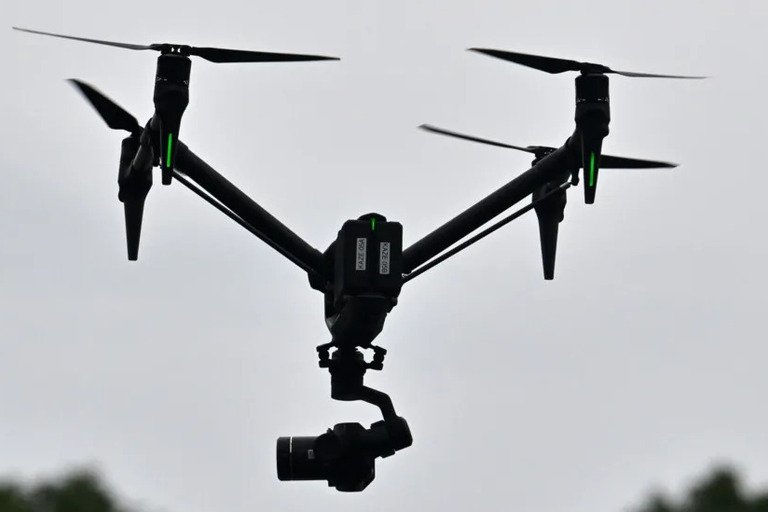
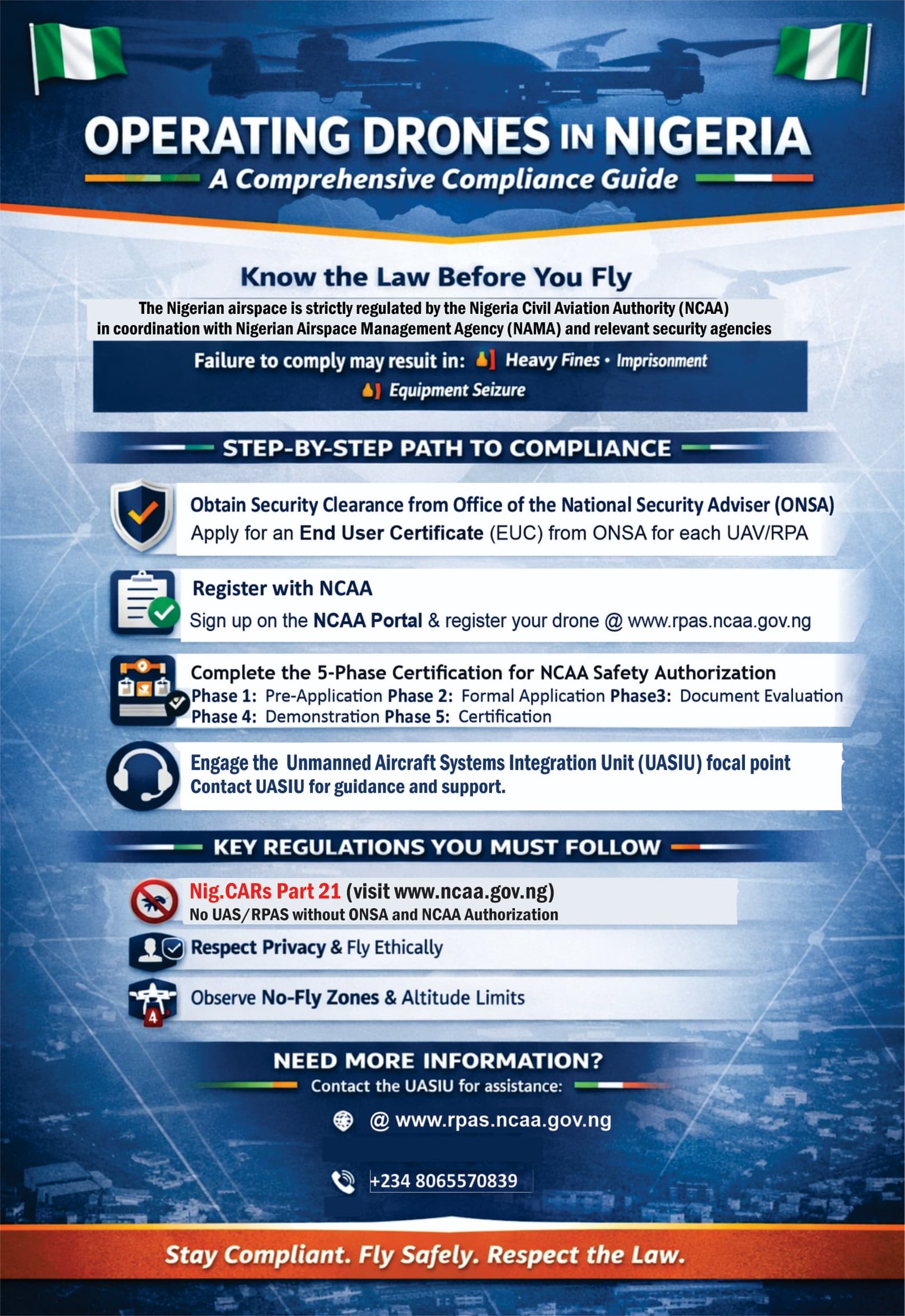
The Nigerian Civil Aviation Authority (NCAA) has released a detailed compliance guide for operating drones in Nigeria, warning that violations could lead to heavy fines, imprisonment, or seizure of equipment.
The guide, developed in collaboration with the Nigerian Airspace Management Agency and security agencies, outlines strict steps individuals and organisations must follow before flying unmanned aerial vehicles.
Strict rules before take-off
According to the NCAA, Nigeria’s airspace remains tightly controlled, and no drone operation is permitted without proper authorisation.
Operators are required to first obtain security clearance from the Office of the National Security Adviser by applying for an End User Certificate for each drone.
Failure to comply with these requirements may result in enforcement actions, including prosecution.
Step-by-step compliance process
The aviation regulator detailed a structured pathway for drone operators:
- Secure clearance from ONSA
- Register the drone through the NCAA portal
- Complete a five-phase certification process
- Engage with the Unmanned Aircraft Systems Integration Unit for guidance
The certification stages include pre-application, formal submission, document evaluation, demonstration, and final approval.
Key regulations to follow
Under Nigeria Civil Aviation Regulations Part 21, drone usage without both ONSA and NCAA approval is prohibited.
Operators are also expected to, respect privacy and ethical standards, avoid restricted airspace and no-fly zones and adhere to approved altitude limits.
Growing concerns over misuse
Authorities say the renewed emphasis on compliance comes amid rising concerns about the misuse of drones for illegal surveillance and security threats.
The NCAA stressed that all drone activities must align with national security protocols and aviation safety standards.
Call for awareness
The agency urged hobbyists, businesses, and media practitioners to familiarise themselves with the law before deploying drones.
Officials added that increased awareness would help prevent violations and ensure safer integration of drone technology into Nigeria’s airspace.