

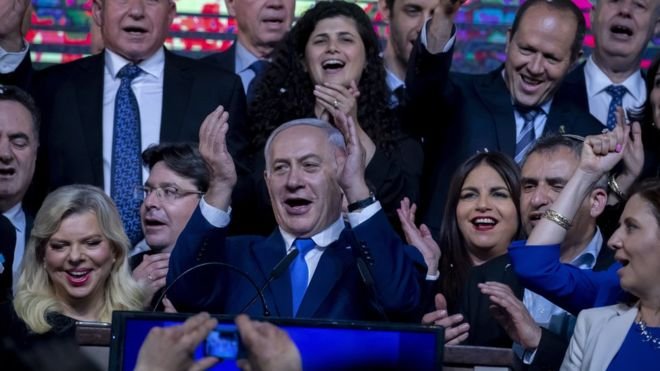
This week, Israel marks its 75th anniversary amid a tumultuous and uncertain atmosphere, marred by a legal dispute that has exposed some of the country’s most profound societal rifts since its founding in 1948.
Tuesday’s Memorial Day, which honours the nation’s military fallen, and Wednesday’s Independence Day have historically functioned as symbols of unification in a country that has fought several wars since its founding.
The atmosphere is different this year.
President Isaac Herzog said, “I am convinced that there is no greater existential threat to our people than the one that comes from within: Our own polarisation and alienation from one another,” during the Jewish Federations of North America General Assembly this week in Tel Aviv.
Since the beginning of the year, hundreds of thousands of Israelis have demonstrated in the streets against Prime Minister Benjamin Netanyahu’s nationalist-religious government’s intentions to enact restrictions on the judiciary, which they see as an existential danger to democracy.
Although last month it was decided to put the proposals on hold to allow for additional debate, the administration and its backers argue that the reforms are required to restrain activist judges who have aggressively encroached onto the realms of parliament and the executive.
However, the demonstrations have persisted, and for many Israelis, the crisis has raised important issues about their nation that go beyond the composition of the Supreme Court and the ability of the administration to overrule its rulings.
Uzy Zwebner, a Tel Aviv-based businessman who develops high-tech business parks, describes himself as a patriot and comes from a line of Zionist immigrants who immigrated to what is now Israel in the 19th century.
He represents a segment of society that has been severely alienated by the current leadership. He was injured in battle during the Yom Kippur war of 1973, only one day after one of his brothers was slain battling the Egyptians in the Sinai.
“What kind of a country are we going to be?” said he. “Are we going to be a democratic, developed nation? One where everyone enlists in the military? Or will we resemble the neighbouring nations?
Deepening Divisions
He is worried about the sharpening of gaps between right-wing settlements and urban liberals, European Ashkenazis and Middle Eastern Mizrahi, holy Jerusalem and laid-back Tel Aviv, and other divisions that have long existed in Israel.
One-fifth of Israel’s population, who are Arab, have mainly refrained from participating in the discussion, which many Palestinians claim overlooks their issues and the long-standing occupation of territories they want to serve as the centre of a future state.
However, the rising influence of the religious groups that supported Netanyahu’s election to office last year has frightened many Israelis of the secular camp, who often object to the unique circumstances and benefits that allow many Orthodox males to forgo military duty and attend Torah schools rather than accept paid jobs.
#UFC287: Israel Adesanya ‘Izzy’ knocks Alex Pereira out to reclaim title
The nationalist right responds by accusing its detractors of disrespecting democracy and fostering a toxic political environment that has fueled the hostility between “populists” and the “liberal elite” observed across the Western world.
According to a study conducted by Channel 12 News last week, over 51% of Israelis feel gloomy about the future of their nation, which has transformed over the course of my lifetime from an impoverished, primarily agricultural land to a high-tech powerhouse.
Elisheva Blum, a resident of Eli in the occupied West Bank, observed, “There’s a lot of fear in the air that sometimes gives way to hatred.” She was born in the United States and moved to Israel in 1988 with her religious family. She asserted that Israelis should not harbour animosity towards one another.
However, she said that the demonstrators’ posters, which often used phrases from the Israeli national anthem like “To be a free people in our land,” offended her.
It disturbs me since, in my opinion, one has nothing to do with the other, she added. We can all agree that we want to live as free individuals in our country, thus the slogans hit extremely near to heart. What does it signify, though?