


Iran launched a new round of missiles at Israel on Tuesday, causing damage and injuries in Tel Aviv as uncertainty surrounded planned talks to end the three-week Middle East conflict.
AFP photos showed rubble-strewn streets and the side of a building in Israel’s economic hub in ruins, as first responders hurried to save at least four people who were lightly injured in four different areas.
Tel Aviv’s mayor Ron Huldai informed the media that a “direct strike” hit a structure in the affluent area, while AFP footage revealed the front of the three-story building ripped apart.
Several Israeli media sources report that police suspect the damage was inflicted by a cluster munition missile armed with three to four warheads, with each warhead containing approximately 100 kilograms of explosives.
Iranian media claimed that US-Israeli warplanes targeted two gas facilities and a pipeline shortly after President Donald Trump retracted his threat to strike energy locations, referencing “very good” discussions aimed at resolving the conflict.
Trump mentioned that his administration was in discussion with a nameless “top individual,” cautioning that if negotiations break down in the upcoming five days, “we’ll just continue bombing with all our might.”
Tehran’s parliamentary speaker, Mohammad Bagher Ghalibaf, who is said to be part of the discussions, claimed “no negotiations” were in progress, asserting that Trump aimed to “influence the financial and oil markets.”
Stock markets surged, and oil prices experienced temporary relief following Trump’s sudden reversal just before a deadline he established to reopen the Strait of Hormuz shipping route or face the US “destroying” Iran’s power facilities.
US media source Axios stated that US negotiators Steve Witkoff and Jared Kushner could engage with an Iranian delegation for discussions in Pakistan as early as this week, potentially accompanied by Vice President JD Vance.
White House spokesperson Karoline Leavitt acknowledged the reports, stating, “Speculation regarding meetings should not be considered definitive until officially confirmed by the White House.”
Pakistan’s Prime Minister Shehbaz Sharif stated on Monday that he had a conversation with Iran’s President Masoud Pezeshkian, offering Islamabad’s assistance to foster peace in the region.
Esmaeil Baqaei, spokesman for the Iranian foreign ministry, stated that messages were sent from “some friendly countries suggesting a US request for talks to conclude the war,” but he refuted claims of any discussions having occurred, according to Iran’s official IRNA agency.
Israeli Prime Minister Benjamin Netanyahu said he spoke with Trump and admitted that Washington believed a deal was possible but threatened to continue hitting Iran and Lebanon to protect Israel.
“Trump believes there is a chance to leverage the tremendous achievements of the IDF and the US military… in an agreement,” he tweeted.
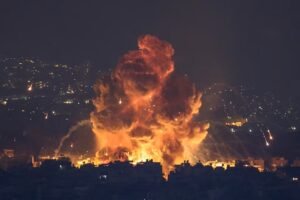
Israel continued its bombing of Beirut’s southern suburbs throughout the night, and a hit on Bshamoun, south of the capital, killed two persons on Tuesday, according to Lebanon’s health ministry.
Strikes also hit multiple service stations affiliated with Iran-backed Hezbollah, which Israel has promised to demolish.
According to Lebanon’s health ministry, Israel’s attacks on the country have killed over 1,000 people and displaced over a million more.
According to the Human Rights Activists News Agency located in the United States, the war has killed at least 3,230 Iranians, including 1,406 civilians. AFP is unable to access strike locations or independently verify tolls in Iran.