



Yoruba nation agitator Sunday Adeyemo, popularly known as Sunday Igboho, has refuted claims by human rights activist and former presidential candidate Omoyele Sowore over what he described as transactional politics and activism.
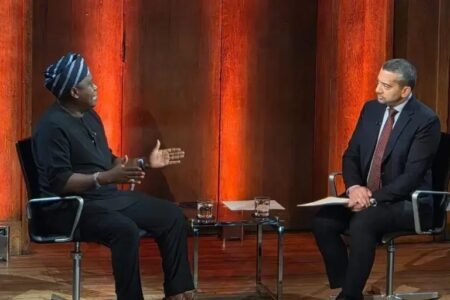
Sowore’s comment followed a viral video in which the activist criticized what he described as “transactional politics” among some regional agitators and influencers, accusing them of aligning with political actors for personal or material benefit.
In the video, Sowore made reference to Igboho, suggesting that his recent political positions, including support for President Bola Tinubu’s potential re-election bid, reflected what he termed “amala politics”—a colloquial expression often used to imply opportunistic or interest-driven engagement rather than principled activism.
Igboho, in a statement issued by his media aide, Olayomi Koiki, in Ibadan, the Oyo State capital, on Tuesday, chastised Sowore for reportedly referring to his activity as “amala politics” in a recent viral video circulating on social media.
He defined the remark as an insignificant diatribe that the public should disregard.
Igboho maintained that his advocacy for enhanced security in the Southwest, as well as his support for President Bola Tinubu’s second-term candidacy in 2027, were constitutional rights aimed at furthering the Yoruba people’s collective interests and Nigeria’s growth.
He said, “We strongly reject the characterization of Igboho’s activism as transactional. Such a myopic position misrepresents the intent and focus of our agitation on effective grassroots security in the Southwest and Nigeria as a whole.
“How many protests did Sowore organize to push for my freedom? Sowore’s claim of fighting for the masses contradicts his alleged daily lodging expenses of N450,000 at a popular Lagos hotel.
“I cannot be compelled to endorse political figures such as Peter Obi or Atiku Abubakar or even align with Sowore’s political platform. I have the right to make independent political decisions based on the security and collective interests of the Yoruba people.”
He stated that Igboho’s advocacy focuses on solving insecurity in Yorubaland, including farmer killings, kidnappings along highways, and attacks on traditional rulers and royal institutions.
However, Koiki underlined that these issues, rather than any desire for political power or revolutionary leadership, serve as the foundation of the Igboho movement.
The statement added, “While Sowore has consistently promoted nationwide revolution as a pathway to leadership, Igboho’s approach is rooted in protecting lives, land, and property within Yoruba territory. This agitation is a response to real and ongoing threats faced by communities in the region.
“Latest security incidents in northern Nigeria, including reported explosions in Maiduguri on March 16, 2026, also raise questions about the broader effectiveness of long-term revolutionary advocacy.
“We challenge Sowore to assess the situation in his home state of Ondo State, considering the growing cases of banditry, kidnapping, and attacks on rural communities.”
According to the statement, insecurity has had a devastating impact on vulnerable groups such as farmers, traditional rulers, women, and children, with various villages affected.
“These realities reinforce Igboho’s long-standing call since 2020 for localized security measures and stronger regional protection strategies.
“Labelling our agitation and efforts as ‘amala politics’ undermines the urgency of the security crisis and the legitimacy of grassroots agitation,” the statement concluded.