


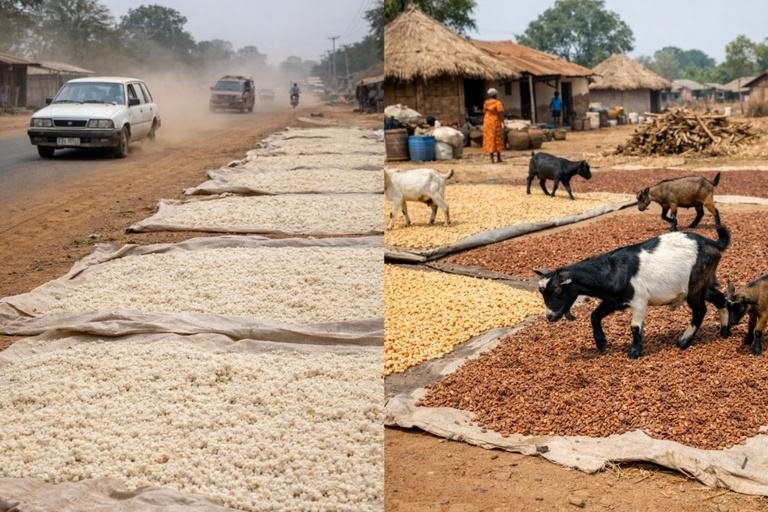
Across Nigeria, a familiar sight lines major roads: cassava, rice, maize and beans spread under the open sun. What looks like a harmless tradition is now raising serious concerns among health experts.
As vehicles speed past, thick dust settles on food meant for dinner tables. Goats and chickens walk freely across drying produce. Beneath it all, bare earth introduces bacteria and fungi invisible to the eye.
Environmental health specialists warn that roadside dust carries exhaust fumes, oil residues and heavy metals. Once absorbed into food, these pollutants accumulate in the body over time, silently damaging organs.
Nutritionists say animal contact turns food unsafe, introducing worms and disease-causing bacteria. Fungi growing during slow drying can release aflatoxins — dangerous toxins linked to cancer and weakened immunity.
Consumers later struggle with stones in rice and beans, unaware many enter during roadside drying. Traders admit this contamination reduces food quality, market value and buyer trust.
Doctors confirm the health toll is real. Hospitals increasingly treat food poisoning, diarrhoea, typhoid and chronic stomach infections, often traced back to unsafe drying practices.
Roadside drying also creates traffic hazards. Drivers swerve to avoid scattered produce, risking accidents and crushing farmers’ goods.
Farmers insist they are trapped by necessity, not ignorance. Most lack space, platforms or drying equipment, forcing them to rely on roadsides to prevent spoilage.
In Niger State, a different approach is emerging. Government-backed programmes are providing tarps, cement floors and education, helping farmers abandon roadside drying.
Health experts say this support-based model is crucial. Without national action, Nigeria’s most common foods will continue absorbing dust, toxins and disease before reaching the plate.
What begins on the roadside, they warn, often ends in the hospital.