




It’s 157 years since the US constitution banned chattel slavery – in which one person is the legal property of another – but left in place an exemption for convicted prisoners.
Throughout most of the US, slavery or involuntary servitude are still legal as punishment for a crime.
But on 8 November, voters in five states – Alabama, Louisiana, Oregon, Tennessee and Vermont – will decide whether to remove these exemptions from their state constitutions and ban slavery entirely.
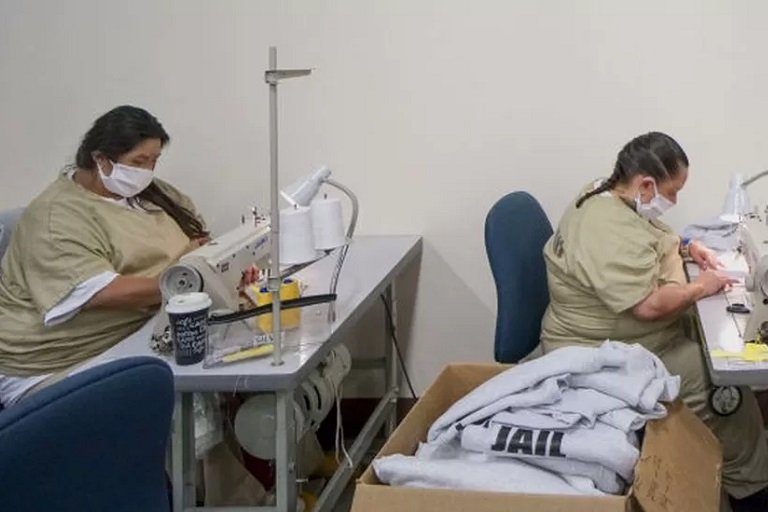
The outcome could enable prisoners to challenge forced labour. Some 800,000 currently work for pennies, or for nothing at all. Seven states do not pay prison workers any wage for most job assignments.
Supporters of change say it’s an exploitative loophole that must be closed.
But critics argue that the move is unaffordable and could lead to unintended consequences in the criminal justice system.
‘I worked for 25 years and came home with 124 dollars’
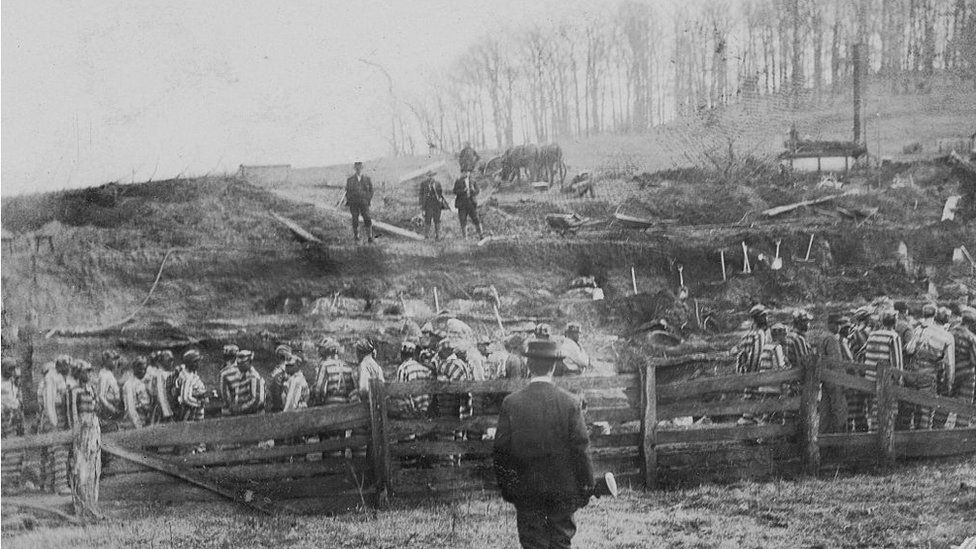
The roots of the modern system originate in the centuries of enslavement of African-Americans, human rights researchers say.
In the years after slavery was outlawed, laws were passed that specifically aimed to suppress black communities and force them into prisons where they would be required to work.
Now, some imprisoned black Americans are still forced to pick cotton and other crops on the southern plantations where their forefathers were kept in chains.
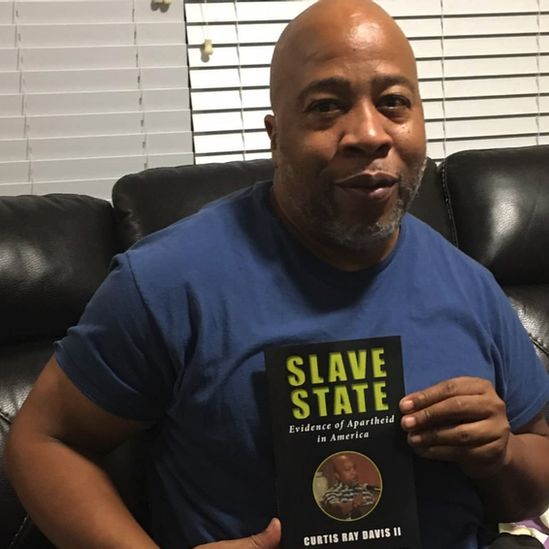
“The United States of America has never had a day without codified slavery,” says Curtis Ray Davis II, who spent over 25 years serving hard labour in a Louisiana prison for a murder that he did not commit, before he was pardoned in 2019.
Mr Davis held a variety of jobs at the notorious Louisiana State Penitentiary – nicknamed Angola after the country from which many of the African slaves in the area were brought.
“I worked for 25 years and came home with 124 dollars,” says Mr Davis, who was never paid more than 20 cents per hour for his work, which he says was “against my will and at gunpoint”.
Around 75% of prisoners at the penitentiary are black, according to the Innocence Project, a group that works to exonerate wrongly convicted prisoners.
They argue that Angola is essentially a place where American slavery never ended.
Her organisation has been working to expand the number of states that ban slavery with no exemptions and has tried to persuade lawmakers in Washington to pass a similar law amending the US Constitution.
Colorado, Nebraska and Utah have passed measures banning all forms of slavery since 2018. Ms Eldrige notes that the movement has attracted bipartisan support – the only way it could pass in Republican-dominated Utah and Nebraska.
In 2023, she predicts that 18 state legislatures will vote on legislation to ban slavery.
Sheriffs warn of ‘unintended consequences’
Very few major opponents have come forward against the efforts by states to remove slavery language, but the movement has encountered some resistance from critics who say it would be too expensive to pay prisoners proper wages, that they do not deserve the same compensation – or that the changes could disadvantage inmates.
A vote in the California legislature to remove slavery references from the law failed this summer after Democrats, including the governor, warned that it would cost more than $1.5bn (£1.3bn) to pay prisoners the state’s $15 per hour minimum wage.
The Oregon State Sheriffs’ Association opposes the measure there, saying it would lead to “unintended consequences” and the loss of all “reformative programs”, which include low-paid tasks like working in the library, kitchen and laundry.
The group says these give prisoners something to do and “serve as an incentive for good behaviour” – which is a factor during parole hearings.
It says two problems with the measure are that it only applies to those convicted, leaving out people in pre-trial detention, and that it could spell the end of any prison programme not specifically authorised by a court sentence.
“Oregon Sheriffs do not condone or support slavery and/or involuntary servitude in any form,” the association says in a pamphlet to voters, adding that the passage of the measure “will result in the elimination of all reformative programs and increased costs to local jail operations”.
Prisoners contribute to the supply chain and economy in many ways, some of them surprising.
They have been commissioned to make everything from eyeglasses to car licence plates to city park benches. They process beef, milk and cheese, and work in call support centres for government agencies and major companies.
It can be hard to track which businesses have used prison labour since the work is typically done for a subcontractor. The subcontractor then sells the products and services to major companies which are sometimes unaware of their origin.
Companies that have previously benefited from prison labour in Utah alone include American Express, Apple, Pepsi-Co and FedEx, according to a June report from the American Civil Liberties Union (ACLU).
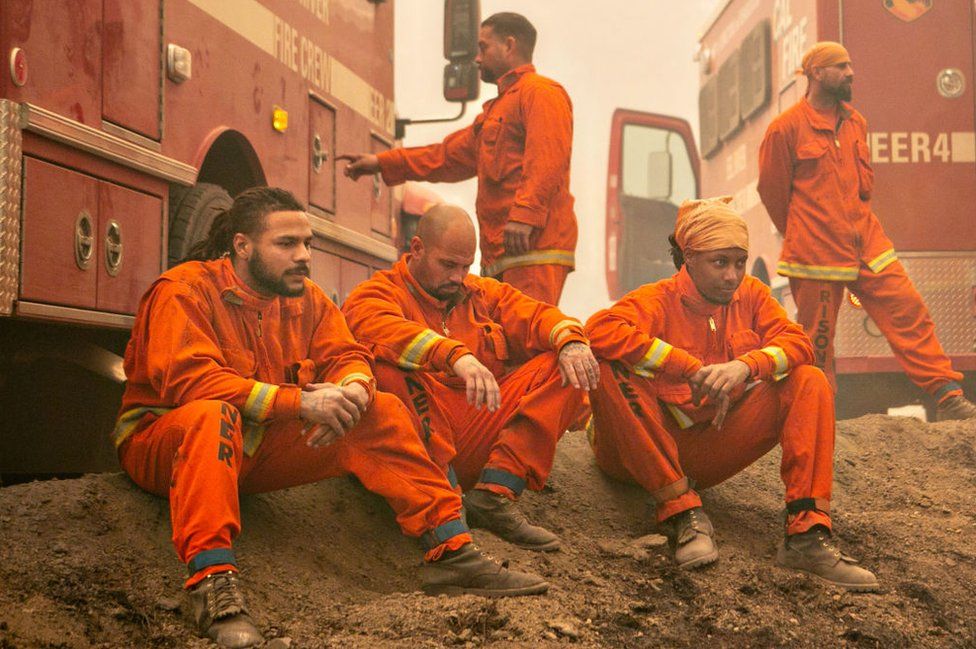
At least 30 states include prison workers in their emergency operation plans for natural disasters and other civil disruptions. They fight wildfires in at least 14 states, according to the ACLU report.
Prisoners’ lives are unlikely to change overnight if the five states with upcoming votes do back a change, however.
“These referendums are necessary but not sufficient to end slavery,” says Jennifer Turner, a human rights researcher with the ACLU. Courts would still need to interpret what rights prison workers have, and whether they will get benefits – like sick leave – that other non-incarcerated workers are legally entitled to.
In states which have previously removed the slavery exemption, outcomes have varied.
In Colorado, a prisoner sued the state, arguing that it was violating the slavery ban. But a court ruled in August that voters had not intended to abolish all prison labour and dismissed the case.
One jail in Nebraska has started paying inmates $20 to $30 per week after the exemption was removed there, according to the New York Times.
More legal challenges are expected as prisoners continue to push for rights and protections.
Mr Davis, who was wrongly jailed in Louisiana, says that removing the prison exemption will strip away an “incentive” for his home state to incarcerate its citizens.
“I believe that any person of conscience, any person that understands property law, understands that human beings should not be the property of other people,” he tells BBC News.
“And they should not be the property of the state of Louisiana.”