


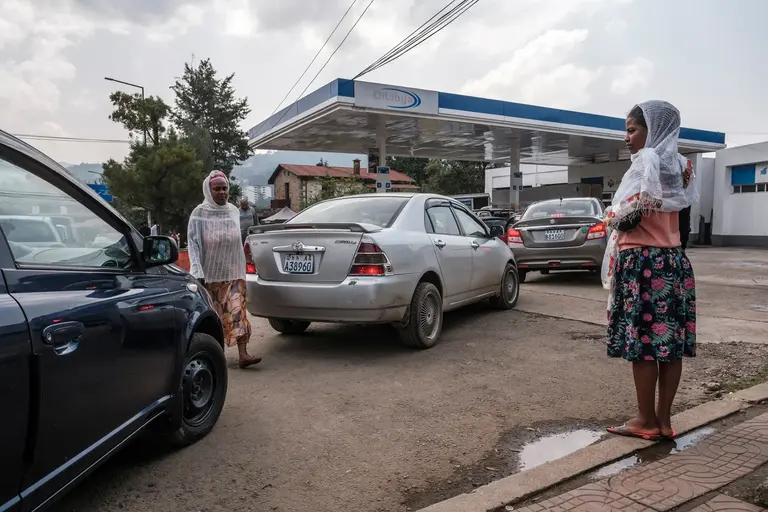
The Ethiopian government has directed all public institutions to send non-essential employees on annual leave in an effort to cushion the impact of a fuel shortage disrupting transportation across the country.
The war in Iran has worsened the fuel crisis in the East African nation, with long queues sometimes involving hundreds of trucks, buses, and cars forming overnight at fuel stations.
The government said placing public workers on leave would help reduce demand for transportation and fuel.
In the long term, authorities plan to rely on electric vehicles (EVs).
A document published by the Ministry of Finance and the Ethiopian Investment Commission outlines plans to replace the entire public fleet with EVs by 2030.
Officials are also encouraging public transport operators to adopt compressed natural gas (CNG) as a substitute for diesel.
This move makes Ethiopia the latest country to implement energy conservation measures as Middle East tensions worsen the global energy crisis.
Last week, Sri Lanka instructed local authorities to switch off streetlights during unnecessary hours, reduce air conditioning use by relying more on electric fans, and limit elevator use by encouraging people to take the stairs.
India, Myanmar, Thailand, the Philippines, Zimbabwe, South Sudan, and Pakistan are also implementing similar measures.