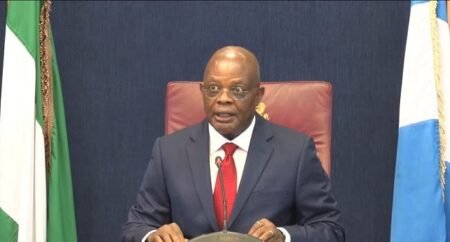




The Economic and Financial Crimes Commission (EFCC) has sounded the alarm over the rapid rise of cryptocurrency-related crimes, warning that billions are being lost globally to illicit digital transactions.
EFCC Chairman, Ola Olukoyede raised the concern during the inauguration of the United Nations Office on Drugs and Crime Country Programme for Nigeria (2026–2030) in Abuja.
Olukoyede disclosed that more than $160 billion was lost globally in 2025 due to illicit cryptocurrency transactions, underscoring the scale of the threat.
He warned that digital currencies such as Bitcoin are increasingly being exploited by criminal networks to move funds across borders undetected.
According to him, advances in technology, weak regulatory frameworks, and gaps in global financial systems have created fertile ground for cyber-enabled financial crimes.
Call for stronger response
The anti-graft agency boss stressed that tackling cryptocurrency crime requires coordinated national strategies, stronger institutions, and intelligence-driven enforcement.
He noted that the new UNODC programme comes at a critical time when Nigeria and the global community are facing growing threats from organised crime, cybercrime, and illicit financial flows.
Olukoyede described the initiative as a strategic platform to strengthen the rule of law, improve the criminal justice system, and protect citizens from financial and violent crimes.
EFCC, UNODC partnership
He reaffirmed the EFCC’s long-standing collaboration with UNODC, saying the partnership has improved Nigeria’s capacity to combat corruption and financial crimes.
The programme, he added, would further enhance institutional effectiveness and support reforms aimed at tackling emerging threats.
ICPC backs collaboration
Also speaking, Chairman of the Independent Corrupt Practices and Other Related Offences Commission, Musa Aliyu, called for stronger inter-agency cooperation.
Aliyu said Nigeria faces interconnected threats including violent extremism, smuggling, organised crime, and illicit financial flows, warning that no single agency can address them alone.
He described the UNODC programme as timely and crucial, emphasising that sustained collaboration with international partners remains key to tackling corruption and strengthening governance.
Both agencies expressed optimism that the new framework would boost Nigeria’s fight against crime, enhance national security, and deliver measurable outcomes through shared expertise and coordinated action.