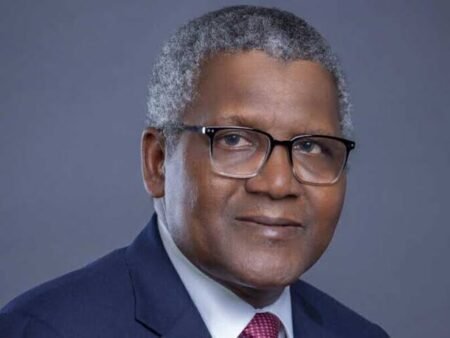



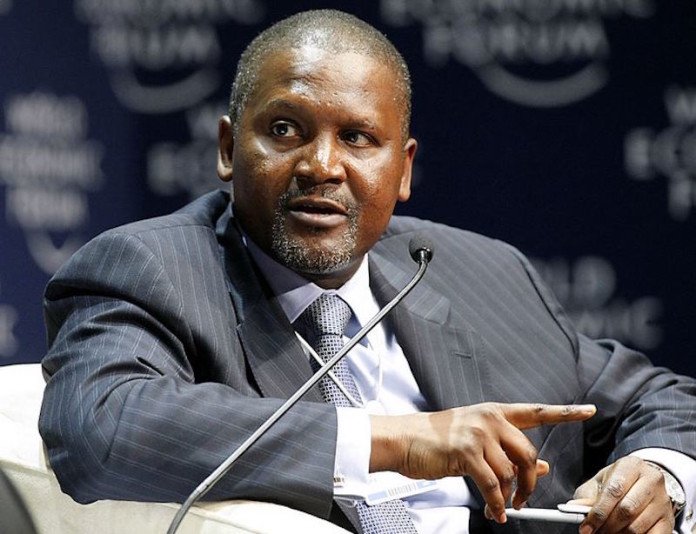
Aliko Dangote, president of the Dangote Group, has warned that surging global energy costs are already forcing some countries to adopt remote working policies to ease economic pressure.
Dangote made the remarks after a courtesy visit to Bola Tinubu following the Eid al-Fitr celebrations.
He said the ongoing tensions in the Middle East could continue to push oil prices higher if the crisis is not resolved, with governments struggling to cushion the impact on citizens.
According to him, rising fuel costs are affecting small businesses and households, particularly those reliant on generators for daily operations.
“People will really feel the heat,” Dangote said, noting that artisans, bakers and manufacturers are among those hardest hit by energy price increases.
He revealed that some countries have already introduced work-from-home measures and reduced working days to cut fuel consumption. In certain cases, workers have been directed to stay home entirely if conditions worsen — similar to policies adopted during the COVID-19 pandemic.
Dangote warned that although Nigeria is not directly involved in the Middle East conflict, the global nature of energy markets means the country cannot escape its effects.
He added that Africa’s heavy debt burden makes the situation more fragile, as rising energy costs could further strain both governments and citizens.
The billionaire businessman stressed that energy prices influence nearly every sector of the economy, warning that opportunistic pricing could worsen inflationary pressures.
He called for urgent global de-escalation, noting that many Africans depend on daily income for survival and cannot afford prolonged economic shocks.
Meanwhile, the International Energy Agency has advised countries to adopt measures such as remote work, reduced travel and energy conservation to cushion the impact of rising oil prices.