


In a significant financial overhaul designed to tackle revenue gaps, poor capital implementation, and coinciding budget periods, the National Assembly on Tuesday approved a revised N43.5tn 2024 Appropriation Act and a revamped N48.3tn 2025 budget plan, with the 2025 fiscal year prolonged to March 31, 2026.
The approval came after extensive plenary sessions in both houses, leading to the passage of the Appropriation Act (Repeal and Re-enactment) Bills for the 2024 and 2025 fiscal years, sent to the legislature by President Bola Tinubu last Friday.
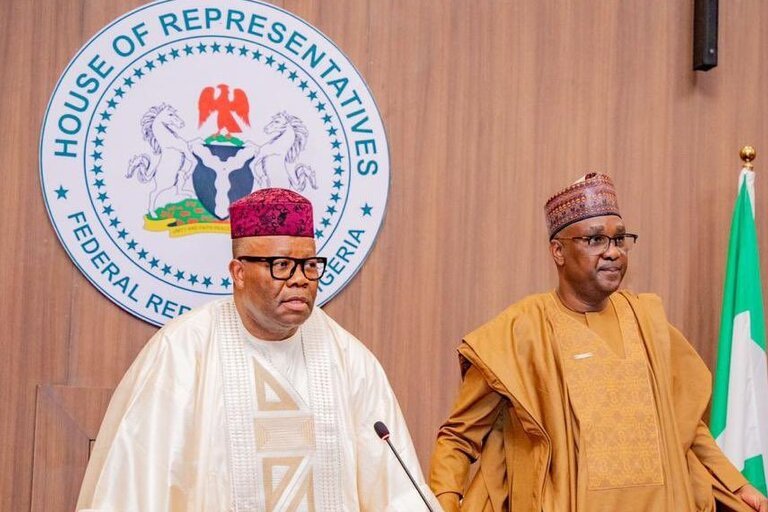
In the Senate, the modified budgets received approval following the adoption of a consolidated report from the Committee on Appropriations, which was presented by Chairman Senator Solomon Adeola (Ogun West).
Lawmakers indicated that the exercise aimed to synchronize Nigeria’s budget framework with current fiscal conditions, tackle implementation shortcomings, and reinstate order in the budgeting process.
In delivering the report, Adeola stated that the primary goal of the bills was to annul previous budget allocations and substitute them with updated amounts that accommodate current revenue limitations, debt sustainability issues, and evolving national priorities.
He stated that the 2024 Appropriation Act was annulled from the initial N35.005 trillion and re-enacted with a total expenditure of N43.561 trillion, with specifics on statutory transfers, debt servicing, recurrent, and capital expenditure thoroughly detailed in the committee’s report.
In the 2025 fiscal year, Adeola announced that the previous N54.99tn Appropriation Act was rescinded and substituted with a new total expenditure of N48.316tn, adding that some capital expenditure was carried over into the 2026 fiscal year because of funding limitations pointed out during the presidential budget presentation
He disclosed that significant interaction between the committee and the economic management team guided the choice to revoke and reenact the budgets, especially to tackle issues regarding revenue performance, debt exposure, and efficient execution.
Emphasizing significant changes, Adeola noted that an extra N8.5tn was added to the capital aspect of the 2024 budget to finance special initiatives addressing security, humanitarian, and economic crises confronting the nation.
He stated that the updated framework was designed to balance responsiveness and fiscal responsibility, making sure that spending associated with debt does not undermine legislative oversight or fiscal discipline.
In the 2025 budget, the committee noted that N6.674tn was taken out of the capital allocation and postponed to the 2026 fiscal year to improve budget efficiency in expectation of better revenue inflows.
Adeola cautioned against the ongoing trend of managing several budget cycles at once, emphasizing that prolonging the duration of one budget while another is active erodes fiscal discipline, transparency, and accountability.
In light of these conclusions, the committee advised that the Senate sanction the abolition and re-enactment of the 2024 Appropriation Act to permit overall spending of N43.5tn from the Consolidated Revenue Fund, in conjunction with the adjusted N48.3tn plan for the 2025 fiscal year, and prolong the execution of the 2025 budget until March 31, 2026.
The Senate later approved the bills for a third reading following thorough discussion.
Simultaneously, the House of Representatives approved the amended N43.56tn budget for 2024 and the N48.31tn budget for 2025 after reviewing and endorsing the report from its Committee on Appropriations.
The text came after a detailed examination of the estimates on a clause-by-clause basis at the Committee of Supply, followed by their approval in a plenary session chaired by the Speaker, Rt. Hon. Tajudeen Abbas.
An analysis of the updated 2024 budget indicates that N1.74tn has been set aside for statutory transfers, N8.27tn for debt servicing, N11.26tn for recurrent (non-debt) expenses, and N22.27tn is designated for capital expenditure and development fund contributions for the fiscal year concluding on December 31, 2025.
In the updated 2025 budget, N3.64tn is allocated for statutory transfers, N14.31tn for debt servicing, N13.58tn for recurrent (non-debt) spending, and N16.76tn for capital expenditure via development fund contributions.
Similar to the Senate version, the 2025 budget is anticipated to continue until March 31, 2026.
President Tinubu, in his message to the National Assembly, stated that the changes were required to include budgetary items that were previously overlooked and to modify capital implementation objectives to align with Nigeria’s execution capabilities and revenue situations.
He stated that the updated framework showcases a more practical capital implementation standard of 30 percent.
The president recognized ongoing shortcomings in executing the capital aspect of the 2024 budget, indicating that these issues greatly hampered infrastructure delivery and developmental initiatives across the country.
He believes that prolonging the lifespan of the 2025 budget until March 31, 2026, would provide Ministries, Departments, and Agencies sufficient time to access and make use of the intended 30 percent capital releases.
Tinubu stated that the strategy is part of a wider fiscal reform initiative designed to address structural issues in Nigeria’s budgeting system, including the persistent challenge of budget overlaps.
He emphasized that eliminating the practice of managing several budgets at once would lead to better planning, improved implementation, and greater transparency and accountability in public spending.
The president stated that the updated budget framework aims to provide more reliable budget outcomes, enhanced coordination of government initiatives, and increased value for Nigerians