



As the world marks World Autism Awareness Day 2026, families of children with autism in Nigeria are grappling with rising costs, limited access to care, and weak enforcement of disability rights.
At the heart of the crisis is affordability. Autism management depends heavily on long-term therapy, yet many households struggle to keep up with the financial demands. At Lagos University Teaching Hospital, speech therapy costs between N12,000 and N15,000 for six weeks, while behavioural and occupational therapies range from N10,000 to N12,000 each within the same period.
With weekly sessions required across multiple therapies, expenses quickly escalate, placing sustained pressure on already stretched family incomes.
Access to services is another major barrier. Most specialised centres are concentrated in urban areas like Lagos, forcing families in peri-urban and rural communities to travel long distances. For caregivers in places like Ikorodu, frequent trips to areas such as Idi-Araba or Ikeja for therapy sessions come with added transport costs, worsened by rising fuel prices.
The economic burden is even heavier for families with more than one child on the autism spectrum. Many parents especially mothers are forced to reduce work hours or quit jobs entirely to provide full-time care, leading to income loss and financial instability.
Despite the existence of the Discrimination Against Persons with Disabilities (Prohibition) Act, enforcement remains weak. Stakeholders say poor funding, low awareness, and implementation gaps continue to expose families to discrimination in housing, education, and social inclusion.
Autism, or autism spectrum disorder (ASD), is a lifelong developmental condition that affects communication and social interaction. According to the World Health Organisation, about 62 million people globally roughly one in 127 are on the spectrum. While awareness is improving, early diagnosis remains a challenge in Nigeria due to limited integration of services into primary healthcare.
Mrs Joko Omotola, National President of the Association for Intellectual and Developmental Disabilities of Nigeria, said stigma still forces many parents to hide their children. She noted that although awareness campaigns are helping, access to therapy remains both scarce and expensive.
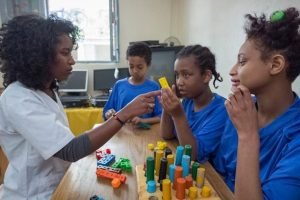
Omotola stressed that early intervention is critical to improving outcomes, but delays in diagnosis are common. She also raised concerns about the education system, noting that many schools lack trained teachers, assistive tools, and tailored learning approaches for children with developmental disabilities.
“In some cases, children spend years in school without acquiring basic skills,” she said.
Calls for reform are growing. Stakeholders are urging the government to include autism therapies in health insurance schemes, expand services to primary healthcare centres, and strengthen social protection for affected families.
The 2026 theme, “Autism and Humanity – Every Life Has Value,” highlights the need for inclusion across education, healthcare, and employment.
Experts are also drawing attention to nutrition as a key, though often overlooked, aspect of care. Odukoya Fiyinfoluwa explained that diet plays a supportive role in improving behaviour, attention, and overall well-being.
He noted that many children with autism face feeding challenges, including food selectivity and sensory sensitivities, which can lead to nutrient deficiencies and worsen symptoms.
For parents like Kelechi Onah, the reality is deeply personal. The Ikorodu-based mother said she had to quit her banking job to care for her autistic child, adding that her husband left shortly after the diagnosis.
Her story reflects a broader struggle faced by many Nigerian families one marked by financial strain, social stigma, and limited institutional support.
As awareness grows, stakeholders say urgent action is needed to move beyond policy and deliver practical support that ensures dignity, inclusion, and equal opportunities for persons with autism.