



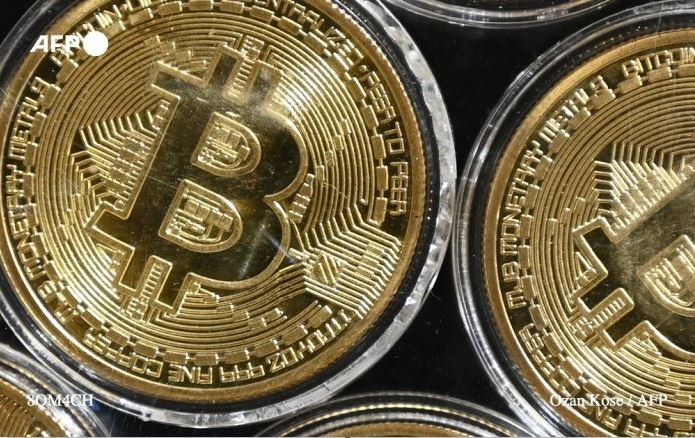
The latest crackdown by Nigeria’s top financial regulators on cryptocurrency has obviously raised outrage among many young Nigerians, taking into consideration that the citizens of Africa’s largest economy have shown their love for Bitcoin more than any nation.
Recent data retrieved from the world’s most popular search engine, Google, revealed that Africa’s largest crypto market, home to over 200 million people, emerged as the first amongst other countries by a long-distance over its interest in the world’s most popular cryptocurrency.
Using local geographical metrics, Delta State has the highest level of Bitcoin interests on state level, followed by Anambra, Ekiti, Enugu, Ondo, Ebonyi, Bayelsa, Osun, Edo, and Imo.
Surprisingly, Nigeria’s business capital, Lagos misses out of the top 15 as regards Bitcoin level of interest on Google, giving credence to bias that areas with lower bank exposure, prone to high insecurity, and with a significant amount of Nigerian millennials, use the flagship crypto-asset to handle their payments and savings.
Furthermore, data retrieved from a multinational law firm Baker McKenzie reveal Africa’s largest economy reportedly has the world’s third-largest bitcoin holdings as a percentage of gross domestic product.
Read also: Bitcoin hits record near $45,000 after Tesla investment
Nigeria’s highly young population (data retrieved from the CIA factbook show more than 90% of Nigerian citizens are within the age of 0-54), coupled with its fast-rising internet adoption and smartphone penetration, has become a force to be reckoned with in the crypto community.
In an interview with Nairametrics, experts revealed that the recent CBN directive which excludes Bitcoin from Nigeria’s financial ecosystem has led Bitcoin peer-to-peer transactions to surge in Nigeria, as it only requires two users connecting directly to each other to trade any crypto asset without the use of their local currency.
Data retrieved from Usefultulips (a Bitcoin analytic data provider) revealed that the use of Bitcoin for peer-to-peer lending in Nigeria surged by 11.6% since the CBN directive took effect about a week ago.
Nigeria led the pack with about $7.8 million in P2P trading on LocalBitcoins and Paxful, while closest rival, Kenya, had a transactional value of just $3.1 million during the past week. South Africa came in third with a transactional value of $2.6 million.
Unsurprisingly, such data shows that a growing number of young Nigerians have started utilizing Bitcoin for payment in order to avoid the often complex route of doing foreign transfers in many Nigerian banks, and other numerous challenges faced with the traditional money transfer services, such as high costs and slow speed, amongst others.
The borderless feature of the world’s most popular crypto asset makes payment effortless and transaction fees outrageously low.
To give context, most Nigerian banks charge 1–2.5%. For a $1 million offshore transfer, bank charges may go up to $10,000, but with Bitcoin, transfer of such amount would not exceed $250, even at peak periods.
It is worthy of note that some high ranking members of the Nigerian Senate also kick against the outright ban of crypto, knowing how much contribution it brings to their constituencies.
“We didn’t create Cryptocurrency and so we cannot kill it and cannot also refuse to ensure it works for us. These children are doing great business with it and they are getting a result and Nigeria cannot immune itself from this sort of business,” said Senator Biodun Olujimi.
Crypto pundits also warn that the most recent crypto ban would lead to a growing number of informal businesses as prevalent in Nigeria’s currency black market, with billions of dollars changing hands without the government’s knowledge.
In addition, such restriction would likely make the situation worse, as it could lead to the relocation and shutdown of locally-based crypto exchanges and threaten thousands of well-paid jobs amid Nigeria’s high unemployment rate.
Bottom line: Bitcoin offers Africa’s leading oil producer an opportunity to cement its place as a knowledge-based economy, which would attract the investment needed to stimulate growth, as seen in the fintech space.
The apex bank’s crypto ban threatens Nigeria’s economic competitive advantage in the fast-rising crypto industry and further sends a wrong signal to foreign investors who provide the needed investments to Africa’s leading frontier.