


Nvidia chief Jensen Huang, newly restored to his position in a stunning turn of events, will face questioning from US lawmakers this week about his explosive sex-and-espionage scandal involving China, which has sparked national security concerns and unsettled global markets.
Huang’s return, only 11 days after he resigned over multiple affairs including one involving a suspected Chinese spy has heightened calls from Republicans and Democrats for explanations and stricter export controls on advanced AI chips.
Huang is due to answer questions behind closed doors on Tuesday from three House committees—Foreign Affairs, Intelligence, and the Select Committee on China.
“The Nvidia board’s brief internal investigation and reinstatement of Jensen Huang do not erase the national security threats and questions that must be addressed,” the committees’ Republican chairmen wrote in a joint statement.
“We remain committed to getting answers on the mass smuggling of Nvidia products, their diversion for Chinese military purposes, and their key role in advancing our foremost adversary’s AI capabilities.”
Tim Teter, the chip giant’s general counsel, will also undergo private questioning by the same committees on Wednesday.
Huang is scheduled to testify publicly before the Senate Banking Committee on Thursday.
The scandal centers on allegations that Nvidia’s advanced AI chips were rerouted to China through Megaspeed, a Singapore-based company once headed by Alice Huang, whom US intelligence reportedly suspects of working for Beijing.
Media reports named her as one of the women with whom Jensen Huang—who is unrelated—had an affair.
“Antipathy toward China is one of the very few things that is really bipartisan in Washington, DC,” said Mick Mulvaney, who served as acting White House chief of staff in the first Trump administration.
“I expect the Democrats to push back hard,” he told CNBC. “I’d be curious to see how hard the Republicans push back.”
Republicans in Congress are already pushing for broad investigations into the scandal, posing a rare challenge to Trump, whose administration secretly worked to secure Huang’s reinstatement through an exceptionally unusual government intervention.
On Thursday, Trump maintained that Huang was not a security threat while praising the intervention as “a great thing” for the world.
Nvidia’s board has also stated that it received assurances from senior US officials and was confident Huang’s reinstatement did not pose a security risk, although its own independent investigation was still incomplete.
Texas Republican lawmaker Michael McCaul condemned the board’s decision to reinstate Huang despite Trump’s “unprecedented” intervention.
“I think what he (Huang) did was a national security risk,” McCaul told ABC News, describing Alice Huang as an “intelligence asset” for China’s ruling Communist Party.
“Congress has to provide the oversight and investigation into this,” he added.
Additional investigations are expected once the Democrats gain control of both chambers of Congress in January.
Senate Democratic leader Chuck Schumer wrote on X that his party’s representatives will “investigate any wrongdoing by the Trump administration, Jensen Huang, other Nvidia executives, and anyone selling out our national security for financial gain.”
Stock markets, still unsettled after a recent technology sell-off, are also likely to follow the congressional hearings closely.
“We continue to expect a rollercoaster ride ahead,” said tech industry analyst Dan Ives.
“Next week Jensen carries the weight of the entire tech sector and AI Revolution thesis when he marches into DC, as the politicians are eagerly awaiting these sessions with all the world watching.”
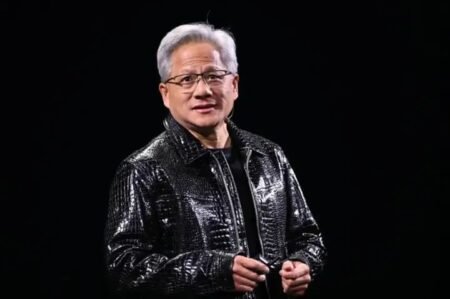
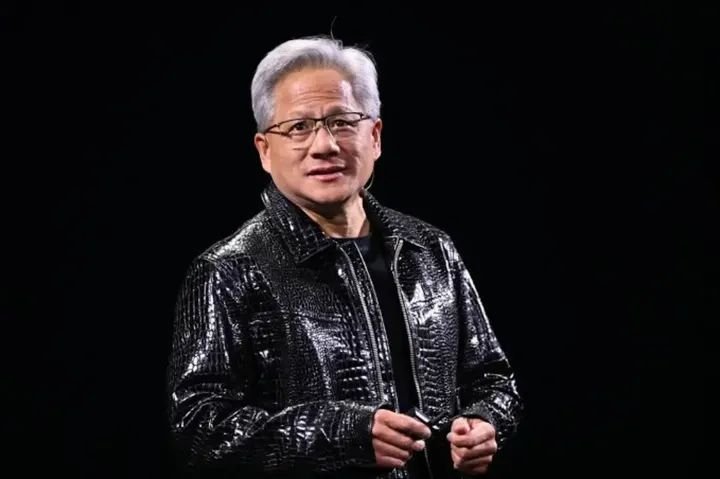
Huang may also come under scrutiny for another matter: his clothing.
At a recent all-hands meeting at Nvidia’s California headquarters, where Huang apologized to employees, he traded his signature black leather jacket for a navy cotton coat—a more restrained appearance that many observers viewed as an indication of remorse.