



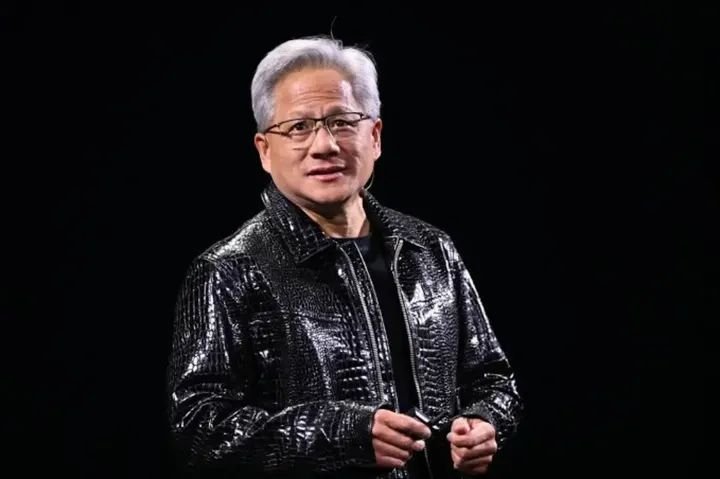
Nvidia co-founder Jensen Huang has returned as chief executive officer, less than two weeks after stepping down following revelations of alleged extramarital affairs, including one involving a woman described as a suspected Chinese spy.
Huang made a triumphant return to the chipmaker’s headquarters in Santa Clara, California, on Monday, November 23, 2026, where cheering employees welcomed him.
Addressing workers gathered in the company’s atrium, the 63-year-old technology executive pledged to improve his leadership.
“I’m going to be a better CEO the second time around,” Huang told employees.
His reinstatement marks a dramatic reversal at one of the world’s most influential technology companies, highlighting his enormous influence over Nvidia, the artificial intelligence industry, financial markets and global technology policy.
Trump, Musk Welcome Huang’s Return
US President Donald Trump praised Huang’s return, claiming his intervention played a crucial role in bringing the Nvidia chief back to office.
Trump described Huang as a genius and insisted that he had done nothing wrong.
Tech billionaire Elon Musk also welcomed the development, while investors responded enthusiastically to the announcement.
Nvidia shares surged 31.5 per cent on Monday, helping drive a broader rally across Wall Street. However, the company’s shares fell more than four per cent in premarket trading on Tuesday.
Huang’s return has also boosted investor confidence in AI-related companies, including CoreWeave and Nebius, whose shares rallied following the announcement.
Why Nvidia Depends on Jensen Huang
Huang’s influence extends far beyond his position as Nvidia’s chief executive.
As co-founder of the chipmaker more than three decades ago, he has played a central role in building the company into a dominant force in the global artificial intelligence industry.
He maintains relationships with governments, technology companies, customers and suppliers worldwide, helping drive the massive expansion of AI infrastructure.
His influence is particularly evident among major technology executives seeking access to Nvidia’s powerful graphics processing units (GPUs).
Oracle Chairman Larry Ellison previously described how technology billionaires, including himself and Musk, had resorted to begging Huang for GPUs.
Huang is also celebrated across Asia, where enthusiastic fans have reportedly approached him for autographs on books, posters and even their bodies.
Concerns Over Nvidia’s Leadership Structure
Despite his successful return, Huang’s reinstatement has revived concerns about Nvidia’s heavy dependence on one individual.
Before his departure, the chief executive faced criticism over the company’s investments in artificial intelligence startups that subsequently purchased Nvidia’s chips.
Some Wall Street analysts raised concerns that the arrangement could create a risky network of circular financing, potentially overstating genuine demand for the company’s products.
Huang rejected the criticism, arguing that Nvidia was supporting genuine market demand.
His resignation had also raised questions about the future of AI companies dependent on Nvidia’s technology and financial support.
Huang’s Influence Raises Corporate Governance Questions
Huang owns approximately 3.6 per cent of Nvidia, making him the company’s fifth-largest shareholder.
Unlike some technology founders, including Meta’s Mark Zuckerberg and SpaceX’s Elon Musk, he does not possess special voting shares that provide additional control over the company.
However, his management style gives him considerable influence over Nvidia’s operations.
He reportedly oversees around 60 direct reports, most of whom work in engineering, covering areas such as memory chips, networking, graphics and processors.
His involvement also extends to Nvidia-backed startups, where he has reportedly helped companies secure customers and participated in fundraising discussions.
The circumstances surrounding his return have prompted criticism from some US lawmakers across party lines.
Corporate governance and ethics professor Nada Kakabadse of Henley Business School argued that Nvidia’s board must establish safeguards around Huang’s influence.
“When the CEO is too big to fire, the board’s job isn’t to fire him. It’s to fence him in,” she said.
Huang’s comeback therefore represents both a major victory for the Nvidia co-founder and a fresh test of corporate accountability at a company central to the global AI revolution.