


The Independent National Electoral Commission (INEC) says it has overhauled its electoral operations ahead of the 2027 general elections following the significant loss of public confidence triggered by the 2023 polls.
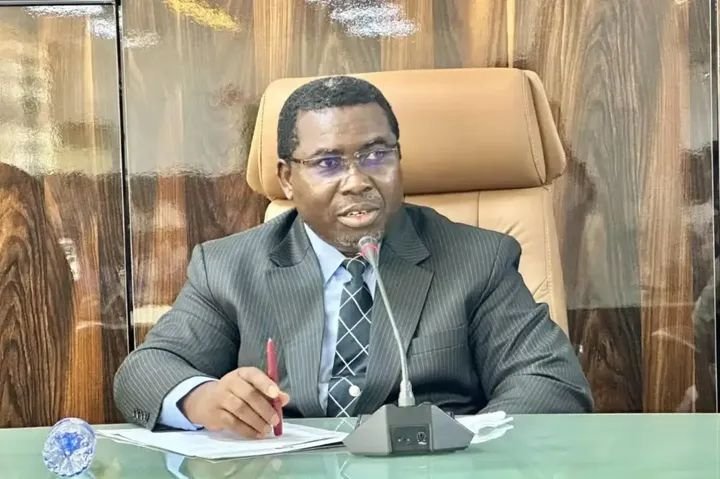
INEC Chairman, Professor Joash Amupitan, acknowledged that the 2023 general election left the commission with a considerable trust deficit, insisting that restoring public confidence would depend on the effective implementation of electoral reforms.
Amupitan spoke through May Agbamuche-Mbu, an INEC national commissioner, on November 17 in Abuja at a peace and security conference organised by the Goodluck Jonathan Foundation.
The conference, themed Safeguarding Peace and Strengthening Social Cohesion in a Competitive Political Environment, focused on the importance of peaceful political participation ahead of the 2027 elections.
Amupitan described electoral administration as a vital pillar of peacebuilding, stressing that public trust must be earned through credible electoral processes.
“We cannot strengthen trust without acknowledging that the 2023 general election left a significant trust deficit. Yet, trust is earned in execution,” he said.
INEC removes 1.6 million invalid voter records
The INEC chairman disclosed that the commission had strengthened its voter registration process through continuous voter registration and automated biometric identification system (ABIS) audits.
He said the exercise led to the removal of more than 1.6 million invalid records, leaving over 100 million verified voters on the register.
Amupitan added that the commission had expanded electoral support for persons with disabilities, with 232,658 registered voters benefiting from improved assistive tools.
New safeguards for electronic results transmission
On electronic results transmission, Amupitan said INEC had upgraded its Result Viewing Portal (IReV) architecture to prevent inaccurate polling unit results from appearing online.
He explained that the system would automatically reject polling unit result forms, including Form EC8A, that fail arithmetic checks or contain figures indicating over-voting.
The measure is intended to strengthen transparency and prevent discrepancies in election results from undermining public confidence.
INEC acquires 57,000 BVAS devices
The commission has also procured 57,000 new Bimodal Voter Accreditation System (BVAS) devices as part of efforts to address the technical challenges experienced during the 2023 elections.
Amupitan said INEC had reduced the maximum number of voters assigned to each BVAS device from 1,250 to 850.
The commission has also established climate-controlled storage facilities nationwide to protect the equipment from extreme temperatures and prevent technical failures.
To assess the improvements, INEC scheduled a nationwide mock accreditation and voting exercise for November 28, 2026.
The exercise is expected to test the upgraded technology and identify operational challenges before the 2027 general elections.
INEC warns against political violence
Amupitan also condemned recent incidents of political violence, intimidation and attacks on campaign convoys and party supporters across the country.
He warned political actors, their sponsors and supporters against actions capable of threatening democratic participation and national stability.
The INEC chairman said security agencies would work alongside the commission to track down those responsible for political violence.
He also cautioned against attacks or intimidation directed at INEC officials and ad hoc election workers, describing such actions as an assault on the Nigerian state.
Amupitan further recalled that Sections 96 and 97 of the Electoral Act 2026 prohibit abusive and provocative campaign language, the use of private guards, thugs and masquerades at political rallies, as well as threats or force intended to intimidate voters and political opponents.
He reaffirmed INEC’s commitment to institutional neutrality, saying the commission’s loyalty remained with the Constitution, the Electoral Act and the sovereign will of Nigerians.