


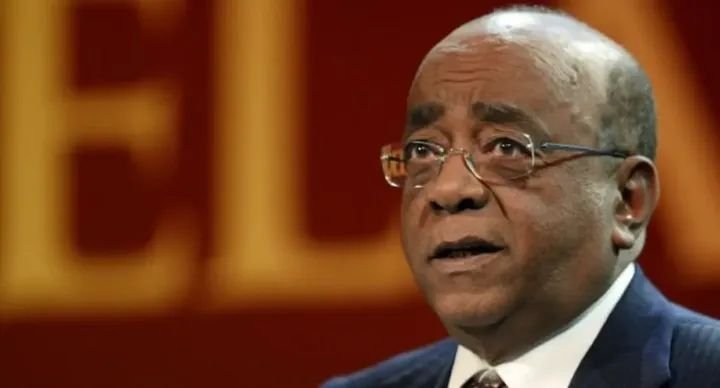
Africa is experiencing a troubling decline in democracy, human rights and public participation as political leaders increasingly draw inspiration from the rise of strongmen across the world, billionaire philanthropist and governance advocate Mo Ibrahim has warned.
Ibrahim, founder of the Mo Ibrahim Foundation, raised the alarm while discussing the organisation’s latest governance report, which highlights growing challenges to democratic accountability across the continent.
According to the report, Africa has recorded improvements in economic opportunities and human development over the past decade. However, these gains have been accompanied by significant deterioration in security, human rights and public participation.
The continent has also experienced multiple military coups and devastating conflicts.
Ibrahim pointed to recent elections in Tanzania and Uganda as examples of growing concerns about democratic governance.
In Tanzania, security forces were accused of killing thousands of protesters following the country’s 2025 elections, while Uganda’s opposition leader, Bobi Wine, was reportedly subjected to attacks and intimidation.
“It’s just disgraceful,” Ibrahim said.
The foundation’s index found that 30 African countries, representing half of the continent’s population, recorded improved overall governance scores in 2025 compared with 2016.
However, 23 countries experienced deterioration, while one remained unchanged. Improvements in economic performance accounted for much of the progress recorded.
Ibrahim attributed the worsening democratic environment partly to the global decline of liberal democracy, pointing to developments in the United States, Europe and Russia.
“It is a strange era… we can see this phenomenon of the rise of strongmen everywhere,” he said.
He added that African leaders could interpret the growing influence of powerful, authoritarian-style leaders elsewhere as encouragement to exercise power without sufficient accountability.
“If you’re an African leader and you see all those strong people rising everywhere…you say, why not me too? I can get away with it,” he said.
Nigeria Among Countries With Declining Governance Scores
The report also highlighted significant governance setbacks in some of Africa’s largest countries, often associated with declining political rights.
Seven of the 10 countries with the steepest governance declines experienced at least one military coup during the decade under review.
Burkina Faso recorded the largest deterioration, while Nigeria, Sudan and Tunisia were also among the countries with the worst performances.
Ibrahim further criticised the changing approach to international diplomacy, particularly the Trump administration’s shift towards what he described as a more transactional relationship with other countries.
He warned that the approach was weakening the international order and undermining the rule of law.
Mo Ibrahim Urges Africa To Reduce Aid Dependence
The governance advocate also expressed concern about the impact of the United States’ decision in 2025 to terminate the United States Agency for International Development (USAID), ending billions of dollars in assistance to African countries.
He described the decision as “brutal”, arguing that Washington should have given African countries adequate notice before withdrawing the support.
“Of course, it is a prerogative of US to give aid or not,” he said. “But please give notice.”
Despite the challenges, Ibrahim said Africa had demonstrated considerable resilience following the funding cuts.
He urged African countries to strengthen their capacity for self-reliance and build partnerships with other international players.
“We need to depend more on ourselves. And we need to work with all partners who are willing to work with Africa, whether it is Europe, whether China or India or whoever,” he said.
Africa’s Youth Population Offers Hope
Despite his concerns about democratic governance, Ibrahim identified Africa’s youthful population as a major source of hope for the continent’s future.
He noted that about 60 per cent of Africans are under the age of 25, while projections indicate that one in every three young people worldwide will be African by 2050.
According to him, younger generations are better informed and educated than previous generations, giving the continent an opportunity to change its development trajectory.
“They are much better informed, much better educated than the past generation,” he said.
Reflecting on the opportunities missed by previous generations, Ibrahim added: “We wasted Africa, our generation, I must admit that. We really wasted some opportunities.”
The Mo Ibrahim Foundation is known for monitoring governance and promoting accountability, leadership and democratic development across Africa.