

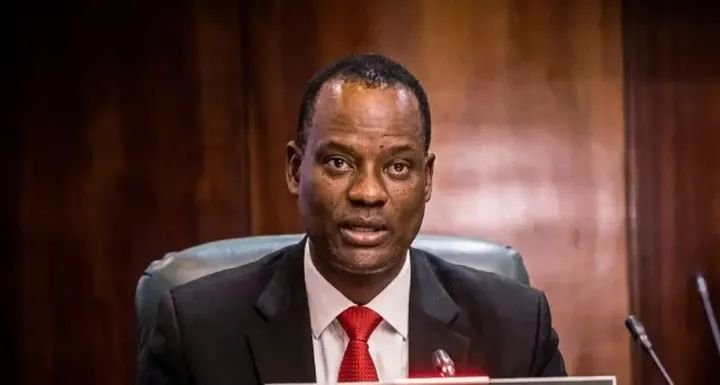
Finance Minister Taiwo Oyedele has said the Nigerian National Petroleum Company (NNPC) Limited’s petrol retail discount is not a fuel subsidy and will not reduce funds accruing to the Federation Account.
Oyedele explained that the discount differs from a government-funded subsidy because it is taken from NNPC Retail Limited’s profit margin rather than public revenue.
In a statement on Friday, the minister said the arrangement would provide relief for motorists without reversing the Federal Government’s decision to end the petrol subsidy regime in 2023.
How NNPC’s Petrol Discount Works
Oyedele said every fuel marketer adds a retail margin to the price paid for petrol, but a retailer can choose to reduce or temporarily forgo that margin to offer customers lower pump prices.
“A margin discount means the retailer chooses to take a smaller margin, or no margin at all for a period, and passes the saving to the customers. The cost of the discount is borne by the retailer alone,” he said.
He explained that a subsidy occurs when the government pays part of the price consumers would otherwise pay, using public funds that could have been spent on salaries, schools, hospitals and infrastructure.
“That is the regime this administration ended in 2023, and it is not coming back,” Oyedele said.
According to the minister, motorists have been paying less for petrol at NNPC Retail stations since 1 October 2026 following the reduction in the company’s retail margin.
He welcomed the price reduction, saying it would bring relief to households, commuters and transport operators.
No Federation Account Funds Used
Oyedele said the petrol discount was not financed by the Federal Government’s budget or the Federation Account.
He explained that NNPC Retail purchases petrol from the Dangote Refinery and other suppliers at market prices on commercial terms before adding its retail margin to determine pump prices.
“The discount comes out of that margin alone, so the discounted pump price remains market-reflective,” he said.
The minister distinguished the arrangement from selling crude oil owned by the Federation below market prices, which he said would amount to a subsidy because the financial shortfall would be borne by public revenue.
Why NNPC Is Offering the Discount
Oyedele said NNPC Retail was established more than 20 years ago as a petroleum marketing and retail company to support the nationwide availability and distribution of refined petroleum products.
He said the company’s role included moderating retail prices rather than focusing solely on maximising profits.
“Its purpose, in other words, is to keep products available across the country and to moderate retail prices, not necessarily to maximise retail profit,” he said.
According to the minister, NNPC has historically sold petrol below the prices charged by some other marketers, and the current discount continues that commercial role.
He added that the arrangement was a business decision that any retailer could make.
Oyedele Says Discount Could Boost NNPC Profits
The finance minister dismissed concerns that a lower retail margin would necessarily reduce NNPC’s profits and the dividends paid to the Federation.
He explained that selling more litres of petrol could offset the smaller margin earned on each litre. The discount could also encourage customer loyalty beyond the promotional period.
“A smaller margin or temporary zero margin on each litre can be more than offset by selling more litres over time. And a discount builds customer loyalty that lasts well beyond the discount period itself,” Oyedele said.
He said the combined effect could increase NNPC Retail’s profits and the dividends paid to the Federation, describing the arrangement as a potential benefit to both consumers and the government.
Oyedele added that retailers worldwide routinely use margin discounts as a commercial strategy.
NNPC Discount Will Not Encourage Smuggling, Minister Says
Oyedele also argued that the discount would neither distort the domestic fuel market nor create additional incentives for petrol smuggling.
He said retail margins account for less than five per cent of the pump price, meaning a discount within that margin would have a limited effect on the overall price.
According to him, petrol prices in neighbouring countries are already between 20 and 40 per cent higher than those in Nigeria.
He maintained that the discount would not significantly widen the price gap or create the market distortions associated with previous subsidy arrangements.
The Presidency said on Friday that NNPC had agreed to suspend its petrol retail profit margin and sell petrol at cost for the next 30 days.
The arrangement is intended to provide temporary relief to motorists amid elevated global crude oil prices and pressure on domestic fuel costs.