



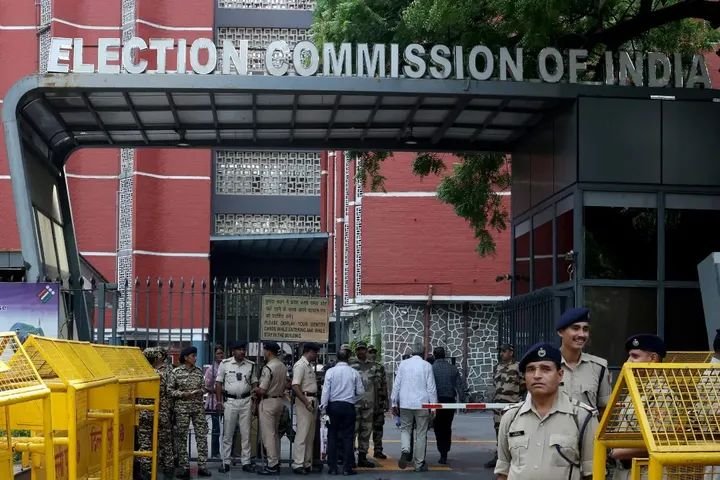
India’s voter verification exercise has sparked nationwide protests, with opposition parties alleging that the removal of 130 million names from electoral rolls could unfairly benefit Prime Minister Narendra Modi’s Bharatiya Janata Party (BJP).
Opposition groups and the youth-led Cockroach Janta Party (CJP) are demanding the resignation of Election Commission chief Gyanesh Kumar. They have also called for a major protest in the capital, New Delhi, on Saturday.
According to Election Commission data cited by the BJP, about 130 million names have been removed from voter registers during the exercise. The figure exceeds Japan’s population and includes people reported to have died, relocated, appeared more than once on the rolls or could not be traced.
The BJP and the Election Commission have denied allegations of political manipulation. However, opposition parties claim that Muslim voters and other minority groups have been disproportionately affected by the deletions.
The controversy has raised concerns about electoral fairness in India, the world’s largest democracy, ahead of crucial state elections scheduled to begin early next year.
Why Is India’s Voter Verification Exercise Controversial?
The dispute intensified after The Indian Express reported in late September that two deputy election commissioners had raised internal concerns about voter list revisions, registration procedures and digital systems.
The newspaper reported that the officials had expressed their concerns to Kumar at least 14 times over 10 months, but their objections were not taken into consideration.
The Election Commission has maintained that differences of opinion are normal during internal deliberations and insisted that its decisions were lawful.
Modi’s BJP, meanwhile, has accused its opponents of undermining public confidence in the country’s democratic institutions by questioning legitimate electoral procedures.
Protests have since spread across several parts of India. Demonstrators include opposition supporters, farmers’ groups and members of the CJP youth movement.
Police say permission has not been granted for Saturday’s planned demonstration in Delhi. The CJP has also reported the pre-emptive detention of some protest leaders.
How Were 130 Million Voter Names Removed?
The BJP, citing Election Commission data, says the 130 million deleted entries fall into four main categories:
– 63 million: People who reportedly relocated.
– 30 million: People officials could not trace.
– 28 million: People reported to have died.
– 10 million: Duplicate entries.
The figures are rounded and total approximately 131 million, slightly above the headline figure of 130 million.
The Election Commission says voter names are removed when individuals have died, relocated, appeared more than once on the register or cannot be traced. Officials are required to document the reasons for each deletion.
However, opposition parties argue that the process has been arbitrary and that some eligible voters have been wrongly excluded.
In Bihar and West Bengal, voters reportedly discovered that their names were missing from electoral rolls and were unable to cast their ballots.
The opposition says the exclusions may have affected election outcomes, while the BJP attributes its electoral success to factors including Prime Minister Modi’s popularity and India’s economic growth.
Why Does the Controversy Matter?
At least seven Indian states are due to hold elections next year, including Uttar Pradesh, the country’s most populous state and an important indicator of national political trends.
Local media reports say the verification exercise in Uttar Pradesh began in October 2025, resulting in the deletion of 13 per cent of names from the electoral rolls.
The process requires voters whose names are missing from draft registers to establish their eligibility before final lists are published.
Those whose applications are rejected can appeal, while people excluded from final registers can challenge the decisions or seek fresh registration.
Opposition parties argue that lengthy procedures could prevent eligible citizens from voting, particularly those who struggle to obtain the necessary documents or meet administrative deadlines.
The controversy has also raised questions about the potential impact of voter register revisions on minority communities and the fairness of future elections.
What Is the Election Commission’s Response?
The Election Commission has rejected allegations that it is politically biased.
Kumar, who became election commission chief in February 2025, has faced repeated criticism from opposition parties. At a press conference last year, he challenged opposition leaders to submit their allegations under oath.
An earlier parliamentary motion seeking his removal was rejected.
A 2023 law passed by Modi’s government grants the election commission chief immunity from prosecution for acts performed in an official capacity.
Amid the latest backlash, the Election Commission announced changes to the verification process. These include home visits by officials to collect documents and extensions to verification deadlines in some states.
The changes are intended to address concerns about the process, although opposition parties continue to question whether the measures adequately protect eligible voters.
What Happens to Voters Removed From the Register?
People whose names are missing from draft electoral rolls can request inclusion before the final lists are published. They can also appeal if their applications are rejected.
Those excluded from final registers must successfully challenge the decision or complete a fresh registration process to participate in future elections.
The opposition maintains that wrongful deletions and lengthy appeals could disenfranchise millions of eligible voters.
The Election Commission, however, insists that the exercise is intended to improve the accuracy of voter registers.
With protests planned and state elections approaching, the dispute over India’s voter verification exercise has become a major test of public confidence in the country’s electoral system.