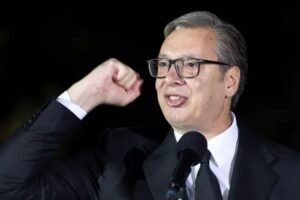



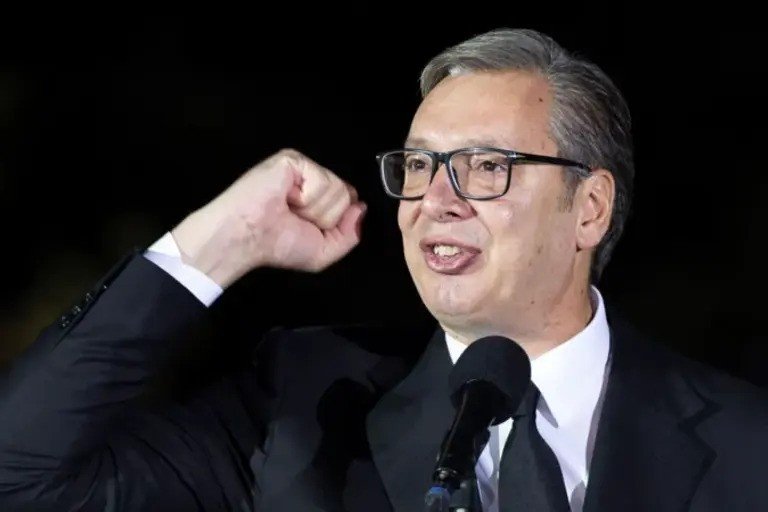
Serbia’s president Aleksandar Vučić has stepped down following over a year of protests led by students and rising public frustration over claims of government corruption.
Addressing supporters outside the presidential building in Belgrade, the capital, Vučić stated that his administration had maintained peace and stability throughout his nine years in office.
He had already made known his plan to resign back in June, and he is now running as his party’s candidate for prime minister in the forthcoming parliamentary elections. Under Serbia’s constitution, Vučić is barred from seeking a third presidential term.
Anger over alleged corner-cutting has long plagued the administration of the populist leader.
It was the roof collapse at the Novi Sad railway station, which killed 16 people, that initially ignited public anger toward the government in 2024.
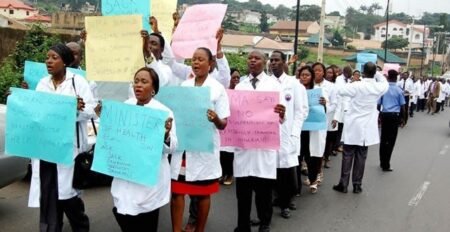
Protests then followed, drawing in a broad cross-section of citizens—from students and teachers to workers and farmers.
Demonstrators felt the disaster was emblematic of more than ten years of rule by Vučić’s Progressive Party, given that he had tied himself closely to the station’s renovation, which was meant to stand as a symbol of Serbia’s progress.
A string of resignations by officials under the embattled president did little to appease the protesters, who kept demonstrating all summer and turned to unrest after accusations of police brutality.
Vučić’s presidential term had been set to end next year. According to Serbia’s constitution, a presidential election must be held within three months of his resignation.
That means Serbians will head to the polls twice before the year is out.
Vučić said the presidential election will be held more than a month after the snap parliamentary election in late October—a vote that was itself called in response to the protests, which had added a demand for elections to their list of grievances.
He had previously said he intended to run in that election as the Progressive Party’s leader, which left open the chance that he could keep a position at the top of Serbian politics.
Parliamentary speaker Ana Brnabić, who is also a Progressive Party member, will take on the role of interim president until a new one is chosen.
According to Serbian public broadcaster RTS, Vučić used his constitutional authority to pardon 49 people, among them 23 students and party loyalists suspected of offenses tied to what he described as the “terrible events we have gone through over the past year and a half.”
The coming parliamentary elections will see Vučić’s Progressive Party face off against a student-led anti-corruption movement called Students Win and a coalition of pro-Western opposition parties known as European Serbia.
Vučić has been a constant presence in Serbian politics for over a decade, becoming prime minister in 2014 before winning his first presidential term in 2017.
He has said publicly that he wants Serbia to join the EU while also cultivating close ties with Russia and opening the country up to Chinese investment.