




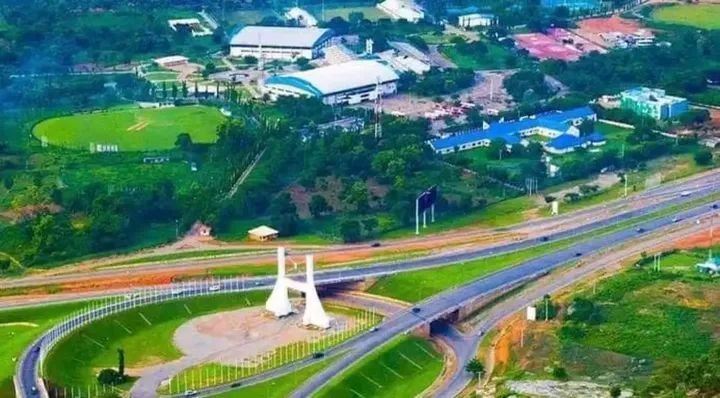
The Nigerian Geological Survey Agency (NGSA) has assured residents of the Federal Capital Territory (FCT) that the earth tremor recorded in parts of Abuja poses no threat to lives or property.
On August 4, parts of the FCT experienced a tremor less than one kilometre deep that lasted about five seconds, triggering panic among residents.
Following the incident, Dele Alake, Minister of Solid Minerals Development, directed the NGSA to provide hourly updates on seismic developments.
Speaking at a technical press briefing in Abuja on Thursday, Olusegun Ige, Director-General of the NGSA, said the agency’s seismic monitoring station in Utako detected the tremor at 11:23:27 am on August 4.
Ige said the tremor was a low-energy, transient micro-event characterised by low amplitude and very short duration.
“Our message to residents of Abuja is clear: there is no cause for alarm. The tremor was a very low-energy, isolated event, and our monitoring has confirmed that the seismic activity has completely subsided,” he said.
Ige said the agency continued monitoring the area for more than five days after the tremor was recorded.
He said waveform records obtained throughout the monitoring period showed only baseline seismic noise, with no evidence of continued tremor activity.
The agency said it also conducted physical assessments at locations where the tremor was reportedly felt, including the Defence Intelligence Agency facility at Mambila Barracks in Asokoro, NNPC Towers and selected buildings within the Central Business District.
According to Ige, no structural damage, injury or serious discomfort attributable to the tremor was recorded at any of the locations inspected.
“We have combined instrumental monitoring with physical assessment on the ground. The evidence before us shows that there is no ongoing seismic threat and no structural damage arising from this event,” he said.
The NGSA said preliminary geological analysis suggested that the tremor may have been caused by the release of accumulated stress within the Earth’s crust through existing geological structures.
Ige explained that although Nigeria is not located along a major active tectonic plate boundary, geological stresses can occasionally be released through existing fault systems, resulting in localised seismic events.
He noted that the characteristics of the August 4 tremor did not indicate a destructive earthquake.
“The fact that a tremor was felt does not mean that a destructive earthquake is imminent. What matters is the nature and energy of the event. In this case, the energy released was extremely low and insufficient to cause structural failure or trigger secondary hazards,” he said.
As part of the briefing, the NGSA took journalists on a technical tour of its seismic monitoring operations.
The journalists were shown the agency’s real-time seismic monitoring equipment and how its technical personnel detect, record and analyse seismic signals.
They also observed the operation of the agency’s latest monitoring technology and interacted with experts responsible for interpreting seismic data.
Ige said the demonstration was aimed at helping the public understand the scientific basis for the agency’s assessment.
The NGSA called for the expansion of the country’s seismic monitoring network, improved logistics and funding, as well as the deployment of appropriate monitoring equipment at major mining and quarrying sites.
It also recommended incorporating geological and seismic data into the planning and construction of major infrastructure, including dams, bridges, railways, airports, mines and quarries.
The agency reiterated the need for strict compliance with structural and safety standards, sustained public education on tremor and earthquake safety protocols, and continuous training of its personnel in modern seismic monitoring and data analysis.
Ige assured Nigerians that the agency would continue to monitor seismic activity in Abuja and other parts of the country and provide updates when necessary.
“We will continue to monitor and analyse. If there is any development that requires public attention or government intervention, we will communicate it promptly and responsibly. For now, residents of Abuja should remain calm and go about their normal activities,” he said.
The ministry urged members of the public to rely on verified information from the NGSA and other competent authorities on seismic and other geological hazards.
It advised residents who observe unusual ground vibrations or have concerns about seismic activity to contact the NGSA emergency line on 09139442811.