


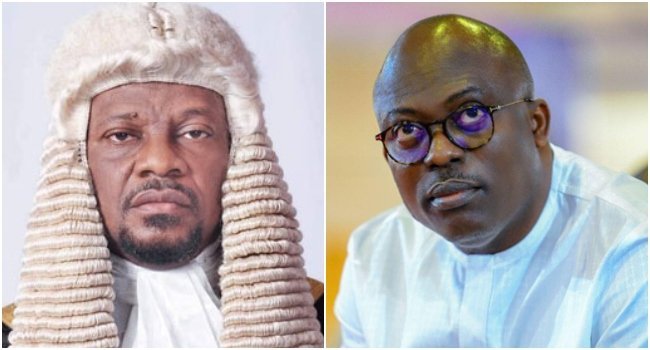
The 2026 Appropriation Bill submitted by Governor Siminalayi Fubara to the Rivers State House of Assembly has not been passed into law one month after it was received.
Chronicle NG gathered that fresh agreements between the Martin Amaewhule-led Assembly and the governor are the main cause for the budget’s delay, despite the fact that little is known about the proposal.
On July 10, 2026, Fubara presented an appropriation bill of N1.854 trillion, known as the “Budget of Resilience for Growth and Development,” to the Assembly for discussion and passage.
Receiving the governor’s budget, the Speaker expressed worry over the late presentation but assured lawmakers that the proposal would be given the attention it merited in the best interests of the state.
The delay has aroused concerns, particularly given that the budget was delivered late owing to the state’s ongoing political crisis.
In addition, no information has been released regarding the budget defense or other legislative hearings that are anticipated to allow lawmakers to scrutinize the proposal before it is passed.
Our correspondent discovered that some projects around the state, including the multi-billion-naira Ring Road, are either not being implemented or are being carried out on a limited scale, owing to a shortage of approved funding.
However, the planned N41.4 billion allocation to the state House of Assembly has sparked controversy, with some stakeholders and people claiming the amount is excessive, while others have justified the allocation, arguing that the House deserves appropriate finance to carry out its tasks.
While responding to questions from journalists during a special media chat in Port Harcourt last Tuesday, Minister of the Federal Capital Territory Nyesom Wike hinted at the reason for the delay, claiming that his successor, Fubara, had failed to fulfill almost all of the agreements reached with lawmakers and those he described as “the family.”
He explicitly claimed that the governor failed to support the state House of Assembly Service Commission, among other commitments.
Wike stated, “The issue of budget—I know why you asked because you expected that once the budget is presented today, it will be passed tomorrow.
“Remember it won’t be that easy. But at the end of the day, the budget will be passed.
“This is why I tell people, yes, they have settled, but you see, do we just do it? Those are things you expect them to do, but at the end of the day the budget will be passed and sent to the governor for his assent.
“I will tell you totally that the governor has failed 90 percent of what they all agreed on.
“Take, for example, he did not release funds to the State Assembly Commission and the rest of them. Cars were not provided.
“If the governor did not want to work with us, the governor would be okay. I’m the governor, and I will join the other party, which is also very dangerous.
“Or I will stay and betray, which is also very dangerous. There is no way you can play it.
“Therefore, it’s better, and it’s good for the interest of the state to work with the family. It’s all over the world.”
It was reported that the parliamentarians negotiated certain confidential arrangements with the governor before enabling the late presentation of the funding measure, citing goodwill and the state’s best interests.
Most stakeholders claimed to be dissatisfied that the bill, which they had expected parliament to study and pass quickly to avoid an impending constitutional crisis, had been delayed for more than a month.
A close Assembly source, who spoke on the condition of anonymity, claimed the delay was due to new agreements reached between Fubara and the lawmakers.
“To resolve the lingering political crisis, the governor met with the lawmakers on his 2026 appropriation bill. They had an agreement, and the deal paved the way for the lawmakers to allow the governor to present his appropriation bill.
“But the governor has not been able to fulfill the agreements. Nobody forced him to enter into the agreement, which the lawmakers know is within his capacity to fulfill. Instead of doing it once, he is doing it in piecemeal,” the source disclosed.
When queried about the components of the new deal, the insider simply stated, “I don’t have details on all of them. However, some of them are related to lawmakers’ advantages and entitlements, particularly constituent initiatives.
“The governor has not done anything for them since assuming office, and I think they expect him to pay most of their outstanding benefits, and he agreed to do so but hasn’t kept to his promise.”
He argued that the delay in enacting the bill was due to a lack of mutual confidence between the governor and the lawmakers, which had resulted from a succession of broken pledges and agreements.
“The House of Assembly does not trust the governor because of a series of broken promises and unfulfilled agreements. So, in any new agreement, they want the governor to satisfy his own side of the bargain first. What they are asking for is legitimate.
“They are not begging for it, and nobody forced the governor to agree to it. They only want him to fulfill it now because they don’t believe he will still do it after getting the budget,” he said.
Attempts to contact the governor’s chief press secretary, Onwuka Nzeshi, were unsuccessful since he did not answer phone calls or respond to texts provided to him at the time of filing this report.
Meanwhile, Obinna Ebogidi, a prominent voice in the state and convener of the Rivers Peace Initiative, has urged the Rivers State Executive and House of Assembly to offer clarity on the status of the 2026 appropriation bill and ensure its approval without further delay.
Ebogidi expressed concern about the delay because the budget was presented late and the Assembly leadership had previously suggested that it would be considered more quickly.
Ebogidi stated that the Rivers people needed to know where the budget stood and what was behind the apparent delayed pace of discussion.
According to him, “I think the most important thing at this point is for the Rivers people to have clarity on where the 2026 budget currently stands.
He also stated that, having been assured of accelerated consideration because of the late presentation, citizens would naturally expect to have seen appreciable progress in the state by now.
“So, naturally, citizens would expect to have seen appreciable movement by now. The concern is not about rushing the legislative process, but about ensuring that the process does not lose momentum, particularly because implementation time is already becoming limited,” Ebogidi stated.
The RPI convener observed that the budget postponement occurred in the midst of substantial political realignments in the state ahead of the 2027 elections, but he emphasized that political changes should not be allowed to damage the state’s day-to-day operations.
“We also have to appreciate the political context in which this is happening. There are significant political realignments taking place, and the governor has a relatively short period left in the life of the administration,” he said.
However, Ebogidi stated that while political developments are a regular element of democratic engagement, governance must continue regardless of the political structures in place prior to 2027.
He said, “Those developments are part of politics and should be allowed to take their course. But irrespective of the political arrangements around 2027, the government must continue to function.”
Ebogidi mentioned that Rivers residents still had pressing needs that required government attention, while critical sectors of the economy and public service could not afford to be stalled because of political considerations.
“The people still have immediate needs, and critical sectors cannot be held back by the political calendar,” he said and appealed to both the executive and legislative arms of government to communicate clearly with the people on the issues surrounding the budget and demonstrate a sense of urgency in concluding the process.
“My appeal is really for both the executive and the legislature to give Rivers people some clarity and urgency.
“If issues are delaying the process, let citizens understand them. If there are none, then the budget should move forward,” he stated.
He emphasized that political reconciliation and good governance were not mutually exclusive and urged the appropriate authorities to pursue both simultaneously.
According to him, the administration’s remaining months should be judged on its capacity to provide tangible improvement to the people rather than the intensity of political activity leading up to 2027.
“In the end, what should define these remaining months is not the politics of 2027, but the quality of governance and the tangible things that can still be delivered to the people of Rivers State,” Ebogidi said.
He recalled the state’s long-running political crises, claiming that Rivers citizens bore the brunt of the disruptions to governance and development.
“After all, it is the people who paid the greatest price in denied governance and lost development opportunities during the nearly two years of governance gridlock in the state,” he said.
In the same vein, the National President of the South-South Youths Initiative, Oscar Imeabe, expressed concern over why the budget submitted by the governor a month ago was still pending in the state House of Assembly.
Imeabe stated that the budget was the blueprint for development, pointing out that the delay had affected project execution and implementation one way or the other.
“One month after Governor Fubara presented the 2026 budget to the Rivers State House of Assembly, the budget is still pending.
“The question Rivers people are asking is simple: Won’t this delay affect governance and the execution of projects across the state?
“Budgets are the blueprint for development. Every day of delay is a day of delayed roads, schools, hospitals, and youth programs.
“We urge the House of Assembly to prioritize the passage of the budget so the government can continue to serve the people effectively.”
The 2026 Appropriation Bill submitted by Governor Siminalayi Fubara to the Rivers State House of Assembly was not enacted into law one month after it was received.
Our correspondent’s investigations revealed that fresh agreements between the Martin Amaewhule-led Assembly and the governor are the main cause for the budget’s delay, despite the fact that little is known about the proposal.
On July 10, 2026, Fubara presented an appropriation bill of N1.854 trillion, known as the “Budget of Resilience for Growth and Development,” to the Assembly for discussion and passage.
Receiving the governor’s budget, the Speaker expressed worry over the late presentation but assured lawmakers that the proposal would be given the attention it merited in the best interests of the state.
The delay has aroused concerns, particularly given that the budget was delivered late owing to the state’s ongoing political crisis.
In addition, no information has been released regarding the budget defense or other legislative hearings that are anticipated to allow MPs to scrutinize the proposal before it is passed.
Our correspondent discovered that some projects around the state, including the multi-billion-naira Ring Road, are either not being implemented or are being carried out on a limited scale, owing to a shortage of approved funding.
However, the planned N41.4 billion allocation to the state House of Assembly has sparked controversy, with some stakeholders and people claiming the amount is excessive, while others have justified the allocation, arguing that the House deserves appropriate finance to carry out its tasks.
While responding to questions from journalists during a special media chat in Port Harcourt last Tuesday, Minister of the Federal Capital Territory Nyesom Wike hinted at the reason for the delay, claiming that his successor, Fubara, had failed to fulfill almost all of the agreements reached with lawmakers and those he described as “the family.”
He explicitly claimed that the governor failed to support the state House of Assembly Service Commission, among other commitments.
Wike stated, “The issue of budget—I know why you asked because you expected that once the budget is presented today, it will be passed tomorrow.
“Remember it won’t be that easy. But at the end of the day, the budget will be passed.
“This is why I tell people, yes, they have settled, but you see, do we just do it? Those are things you expect them to do, but at the end of the day the budget will be passed and sent to the governor for his assent.
“I will tell you totally that the governor has failed 90 percent of what they all agreed on.
“Take, for example, he did not release funds to the State Assembly Commission and the rest of them. Cars were not provided.
“If the governor did not want to work with us, the governor would be okay. I’m the governor, and I will join the other party, which is also very dangerous.
“Or I will stay and betray, which is also very dangerous. There is no way you can play it.
“Therefore, it’s better, and it’s good for the interest of the state to work with the family. It’s all over the world.”
It was reported that the parliamentarians negotiated certain confidential arrangements with the governor before enabling the late presentation of the funding measure, citing goodwill and the state’s best interests.
Most stakeholders claimed to be dissatisfied that the bill, which they had expected parliament to study and pass quickly to avoid an impending constitutional crisis, had been delayed for more than a month.
A close Assembly source, who spoke on the condition of anonymity, claimed the delay was due to new agreements reached between Fubara and the MPs.
“To resolve the lingering political crisis, the governor met with the lawmakers on his 2026 appropriation bill. They had an agreement, and the deal paved the way for the lawmakers to allow the governor to present his appropriation bill.
“But the governor has not been able to fulfill the agreements. Nobody forced him to enter into the agreement, which the lawmakers know is within his capacity to fulfill. Instead of doing it once, he is doing it in piecemeal,” the source disclosed.
When queried about the components of the new deal, the insider simply stated, “I don’t have details on all of them. However, some of them are related to lawmakers’ advantages and entitlements, particularly constituent initiatives.
“The governor has not done anything for them since assuming office, and I think they expect him to pay most of their outstanding benefits, and he agreed to do so but hasn’t kept to his promise.”
He argued that the delay in enacting the bill was due to a lack of mutual confidence between the governor and the lawmakers, which had resulted from a succession of broken pledges and agreements.
“The House of Assembly does not trust the governor because of a series of broken promises and unfulfilled agreements. So, in any new agreement, they want the governor to satisfy his own side of the bargain first. What they are asking for is legitimate.
“They are not begging for it, and nobody forced the governor to agree to it. They only want him to fulfill it now because they don’t believe he will still do it after getting the budget,” he said.
Attempts to contact the governor’s chief press secretary, Onwuka Nzeshi, were unsuccessful since he did not answer phone calls or respond to texts provided to him at the time of filing this report.
Meanwhile, Obinna Ebogidi, a prominent voice in the state and convener of the Rivers Peace Initiative, has urged the Rivers State Executive and House of Assembly to offer clarity on the status of the 2026 appropriation bill and ensure its approval without further delay.
Ebogidi expressed concern about the delay because the budget was presented late and the Assembly leadership had previously suggested that it would be considered more quickly.
Ebogidi stated that the Rivers people needed to know where the budget stood and what was behind the apparent delayed pace of discussion.
According to him, “I think the most important thing at this point is for the Rivers people to have clarity on where the 2026 budget currently stands.
He also stated that, having been assured of accelerated consideration because of the late presentation, citizens would naturally expect to have seen appreciable progress in the state by now.
“So, naturally, citizens would expect to have seen appreciable movement by now. The concern is not about rushing the legislative process, but about ensuring that the process does not lose momentum, particularly because implementation time is already becoming limited,” Ebogidi stated.
The RPI convener observed that the budget postponement occurred in the midst of substantial political realignments in the state ahead of the 2027 elections, but he emphasized that political changes should not be allowed to damage the state’s day-to-day operations.
“We also have to appreciate the political context in which this is happening. There are significant political realignments taking place, and the governor has a relatively short period left in the life of the administration,” he said.
However, Ebogidi stated that while political developments are a regular element of democratic engagement, governance must continue regardless of the political structures in place prior to 2027.
He said, “Those developments are part of politics and should be allowed to take their course. But irrespective of the political arrangements around 2027, the government must continue to function.”
Ebogidi mentioned that Rivers residents still had pressing needs that required government attention, while critical sectors of the economy and public service could not afford to be stalled because of political considerations.
“The people still have immediate needs, and critical sectors cannot be held back by the political calendar,” he said and appealed to both the executive and legislative arms of government to communicate clearly with the people on the issues surrounding the budget and demonstrate a sense of urgency in concluding the process.
“My appeal is really for both the executive and the legislature to give Rivers people some clarity and urgency.
“If issues are delaying the process, let citizens understand them. If there are none, then the budget should move forward,” he stated.
He emphasized that political reconciliation and good governance were not mutually exclusive and urged the appropriate authorities to pursue both simultaneously.
According to him, the administration’s remaining months should be judged on its capacity to provide tangible improvement to the people rather than the intensity of political activity leading up to 2027.
“In the end, what should define these remaining months is not the politics of 2027, but the quality of governance and the tangible things that can still be delivered to the people of Rivers State,” Ebogidi said.
He recalled the state’s long-running political crises, claiming that Rivers citizens bore the brunt of the disruptions to governance and development.
“After all, it is the people who paid the greatest price in denied governance and lost development opportunities during the nearly two years of governance gridlock in the state,” he said.
In the same vein, the National President of the South-South Youths Initiative, Oscar Imeabe, expressed concern over why the budget submitted by the governor a month ago was still pending in the state House of Assembly.
Imeabe stated that the budget was the blueprint for development, pointing out that the delay had affected project execution and implementation one way or the other.
“One month after Governor Fubara presented the 2026 budget to the Rivers State House of Assembly, the budget is still pending.
“The question Rivers people are asking is simple: Won’t this delay affect governance and the execution of projects across the state?
“Budgets are the blueprint for development. Every day of delay is a day of delayed roads, schools, hospitals, and youth programs.
“We urge the House of Assembly to prioritize the passage of the budget so the government can continue to serve the people effectively.”