




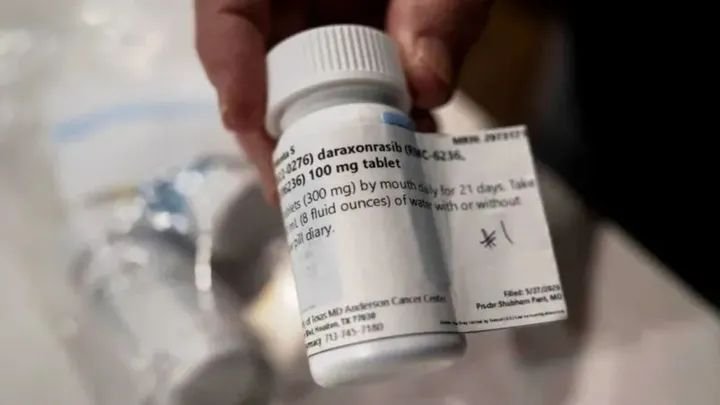
A clinical trial has delivered encouraging results for pancreatic cancer patients after a new pill was found to significantly extend survival among people with advanced forms of the disease.
The drug, daraxonrasib, was used in a trial involving 500 patients across North America, Europe, and Asia. A total of 248 patients were given daraxonrasib, while 252 received chemotherapy.
The trial results showed that patients treated with daraxonrasib survived for an average of 13.2 months, compared with 6.6 months for those who received chemotherapy. The drug also caused fewer side effects.
The drug, taken once daily, works by blocking a mutated gene known as KRAS, which is found in more than 90 percent of pancreatic cancers and helps tumours grow and spread.
The trial was led by American scientists and presented at the annual meeting of the American Society of Clinical Oncology (ASCO) in Chicago, which took place from May 29 to June 2.
“These results are landscape-changing for metastatic pancreatic cancer patients with a KRAS mutation,” Rachna Shroff, chief of the Division of Haematology/Oncology at the University of Arizona Cancer Centre, said.
Compared with Western countries, pancreatic cancer is not common in Nigeria. The disease ranks 19th in cancer incidence, according to the Global Cancer Observatory.
However, the number of deaths from pancreatic cancer (1,344) is almost equal to the number of new cases (1,283), largely because the disease often shows no symptoms in its early stages and is usually detected late.
According to the Lakeshore Cancer Centre, pancreatic cancer is commonly diagnosed at an advanced stage, with about 50 percent of patients already having cancer that has spread to other organs.
Patients may present with fatigue, poor appetite, weight loss, itchy skin, dark urine, and nausea. Jaundice is also a common symptom, but by this stage, pancreatic cancer is likely to be advanced.
ASCO said daraxonrasib will be submitted to the US Food and Drug Administration to support its evaluation and potential approval as a new treatment for pancreatic cancer.