




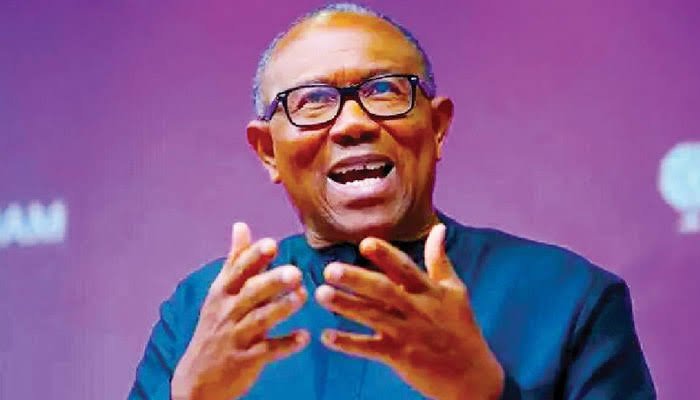
Nigeria Democratic Congress (NDC) chieftain, Peter Obi, has lamented the recent attacks and kidnappings of students from two schools in Borno and Oyo states, describing them as threats to Nigeria’s future.
The recent attacks in Borno and Oyo states saw gunmen abduct students from Mussa Primary/Junior Secondary School in Askira/Uba LGA and from schools in Ahoro-Esinele, Oriire LGA, where a teacher was killed and the principal abducted in the latter incident.
Reacting to the incidents on Saturday via a post on his official X account, Obi described the kidnappings as part of a growing “ransom economy” that endangers children’s right to education, worsens Nigeria’s out-of-school crisis, and disproportionately affects girls, who often drop out permanently due to fear.
“Sad: Schoolchildren Now ‘Pawns in Ransom Economy’: There is nothing more heartbreaking for a nation than its inability to protect its children. The recent attacks and kidnappings of students from two schools in Mussa Village, Askira/Uba LGA, Borno State (North-East), and Ahoro-Esinele community, Oriire Local Government Area, Oyo State (South-West), mark a grave crisis that threatens the future of the nation,” he wrote.
“Beyond the immediate terror of these acts, they represent a significant infringement on the basic right to education and a safe upbringing. The fear of further abduction often leads children, especially girls, to permanently leave school.”
According to him, the ongoing out-of-school crisis is alarming in itself and is likely to worsen because of these distressing incidents.
Obi argued that in areas frequently affected by such attacks, education systems often deteriorate, while fear becomes a major obstacle to school enrollment, adding to the already high number of children currently out of school.
The former governor of Anambra State pointed out that ensuring the safety of schools is not just a logistical issue but also a moral obligation.
Obi therefore urged the prioritisation of school safety through community intelligence, fortified facilities, and accountable justice systems as a moral imperative for building a safer and better Nigeria focused on children’s wellbeing.
“Protecting the next generation demands a blend of community-led intelligence, the physical strengthening of educational facilities, and a transparent justice system that holds wrongdoers accountable,” he stated.
“For the actualisation of a new Nigeria that is POssible, we must make the safety, education, and wellbeing of our children a priority.”