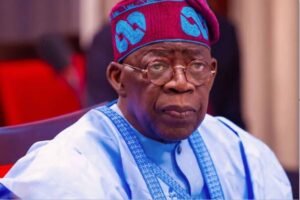





President Bola Tinubu’s political positioning ahead of the 2027 elections is drawing increased attention, with analysts debating its potential impact on Nigeria’s opposition landscape.
Although the president enjoys the backing of a large number of state governors, recent developments within opposition parties have raised questions about the broader state of political competition.
The African Democratic Congress (ADC), often viewed as an emerging opposition platform, has recently experienced internal tensions. This follows earlier challenges within the Labour Party (LP) and the Peoples Democratic Party (PDP), both of which have faced organisational and leadership disputes in recent years.
Some political observers see a pattern in these developments, suggesting they could influence the strength of opposition parties ahead of 2027. Others, however, argue that internal party dynamics and long-standing structural issues are largely responsible for the crises.
Historical comparisons have also emerged. During the administration of Olusegun Obasanjo, opposition parties faced significant setbacks in the early 2000s. At that time, Tinubu, then governor of Lagos State, remained one of the few opposition figures to retain political ground.
This contrast has contributed to ongoing discussions about continuity and change in Nigeria’s political environment.
Attention has also turned to the role of the Independent National Electoral Commission (INEC). While the commission is constitutionally mandated to act independently, recent events have prompted debate about its perceived role in party processes and electoral preparations.
Analysts note that a competitive political environment remains central to democratic governance. As preparations for the 2027 elections gradually take shape, the evolution of opposition parties and institutional responses will likely remain key areas of focus.