



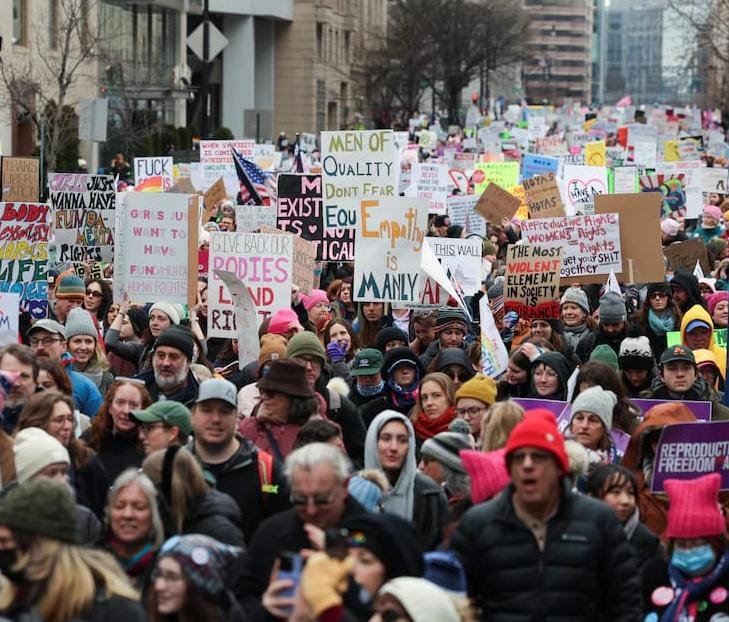
Mass protests are set to sweep across the United States this Saturday, as millions prepare to rally against President Donald Trump over his leadership style, controversial policies, and the ongoing war in Iran.
The demonstrations, organised under the “No Kings” movement, mark the third major nationwide protest since Trump began his second term in January 2025. Activists say public anger has intensified, fuelled by concerns over what they describe as authoritarian governance and an expanding military conflict abroad.
Organisers expect more than 3,000 rallies across cities, suburbs and rural communities—an increase from previous protest days. Earlier demonstrations in June and October reportedly drew millions, with the latter attracting around seven million participants nationwide.
At the heart of the outrage is Trump’s decision to launch a military campaign in Iran alongside Israel, a move critics say contradicts his earlier image as a peace-oriented leader. Protesters also point to his use of executive power, legal actions against opponents, and policies on immigration and climate change as major grievances.
Veterans’ group Common Defense, part of the protest coalition, accused the administration of dragging the country deeper into conflict while undermining civil liberties at home.
“Since the last time we marched, this administration has dragged us deeper into war,” said a spokesperson, citing concerns over civil rights abuses and rising domestic tensions.
Minnesota is expected to be a key flashpoint, following months of unrest tied to federal immigration crackdowns. Adding a cultural dimension to the protests, legendary musician Bruce Springsteen is scheduled to perform in St. Paul, debuting a song inspired by victims of earlier demonstrations.
The “No Kings” movement says the protests reflect a growing national resistance. Notably, organisers claim that two-thirds of participants now come from outside major urban centres, signalling broader discontent beyond traditional political strongholds.
With Trump’s approval rating hovering around 40 percent and midterm elections approaching, the demonstrations could shape the political landscape in the months ahead.
Labour leader Randi Weingarten warned that the country is at a turning point, citing rising living costs and widespread public anxiety.
“People are afraid, and they can’t afford basic necessities,” she said. “It’s time the administration listened.”