



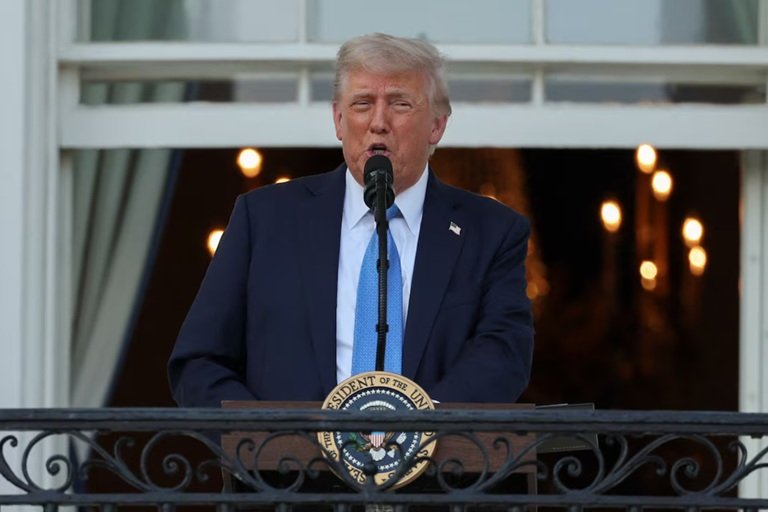
The administration of Donald Trump is preparing a major expansion of efforts to strip US citizenship from naturalised Americans, significantly widening its immigration crackdown.
Officials familiar with the plans say U.S. Citizenship and Immigration Services (USCIS) has begun redeploying specialists and reassigning staff nationwide to identify potential denaturalisation cases. The target is to generate between 100 and 200 cases each month for immigration litigation — a sharp rise from Mr Trump’s first term, when just 102 cases were filed over four years.
Denaturalisation has historically focused on individuals accused of concealing criminal histories, human rights abuses or other material facts during the citizenship process. However, the renewed drive forms part of a broader enforcement push led by the Department of Homeland Security (DHS), which also includes expanded detention capacity, large-scale deportation missions, visa revocations and attempts to remove some green card holders.
USCIS spokesman Matthew Tragesser said the agency acts only where there is credible evidence of fraud or misrepresentation.
“We maintain a zero-tolerance policy towards fraud in the naturalisation process and will pursue denaturalisation proceedings for any individual who lied or misrepresented themselves,” he told NBC News.
The US Department of Justice has instructed its attorneys to prioritise such cases, particularly those involving national security concerns, war crimes, torture or government fraud. Officials are also embedding trained personnel in more than 80 field offices to accelerate case development.
Trump has repeatedly sought to redefine the scope of US citizenship, including challenging birthright citizenship — a matter currently before the Supreme Court. In a post on Truth Social, he vowed to remove anyone who is not a “net asset” to the United States and pledged to “denaturalize migrants who undermine domestic tranquility”.
Roughly 800,000 people are naturalised each year after meeting strict criteria, including permanent residency, English proficiency, civic knowledge and proof of “good moral character”. Legal experts stress that stripping citizenship remains rare and complex, requiring court proceedings.
Doug Rand, a former USCIS official, said no president can unilaterally revoke citizenship once lawfully granted, underscoring the constitutional safeguards surrounding naturalisation.