




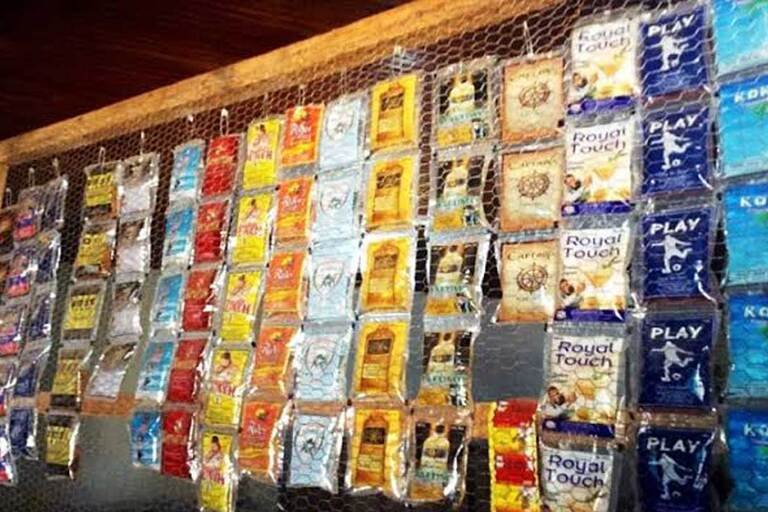
The National Agency for Food and Drug Administration and Control (NAFDAC) has resumed enforcement of the restriction on the production and sale of alcoholic beverages packaged in sachets and small plastic or glass bottles containing less than 200 milliliters.
The agency stressed that it did not close any alcohol-producing companies but rather barred the sale of alcohol in sachets and small containers, citing public health concerns.
Prof. Mojisola Christianah Adeyeye, Director-General of NAFDAC, stated on Thursday that the decision was intended to prevent children, adolescents, and young people from the dangerous use of alcohol.
“The National Agency for Food and Drug Administration and Control has resumed enforcement of the ban on the production and sale of alcoholic beverages packaged in sachets and small-volume PET or glass bottles below 200 ml, in line with a resolution of the Senate of the Federal Republic of Nigeria and the Agency’s public health mandate,” the statement read.
According to the agency, the widespread availability of high-alcohol-content beverages in sachets and small containers has made alcohol cheap, easy to obtain, and easy to conceal, contributing to an increase in underage drinking, addiction, domestic violence, traffic accidents, school dropouts, and other social vices.
Adeyeye pointed out that putting warning labels like “Not for children” on sachets and small containers had proven ineffectual owing to societal constraints.
“Many parents do not even know their children consume sachet alcohol because the pack size is small, cheap, and easily concealed,” she said.
She said that school records had uncovered troubling patterns, including a recent case in which a teacher revealed that a kid claimed he could not sit for a test unless he first consumed sachet wine.
NAFDAC recalled that in December 2018, it, along with the Federal Ministry of Health and Social Welfare and the Federal Competition and Consumer Protection Commission, signed a five-year Memorandum of Understanding with manufacturers to eliminate sachet and small-volume alcohol packaging by January 31, 2024.
The ban was later extended until December 2025 to allow manufacturers to exhaust existing inventory and restructure manufacturing lines.
“The current Senate resolution aligns with the spirit and letter of that agreement and with Nigeria’s commitment to the World Health Assembly Global Strategy to Reduce the Harmful Use of Alcohol,” she said.
Adeyeye emphasized that the ban was not punitive but protective.
“This ban is not punitive; it is protective. It is aimed at safeguarding the health and future of our children and youth by not allowing alcohol in small pack sizes.
“The decision is rooted in scientific evidence and public health considerations. We cannot continue to sacrifice the well-being of Nigerians for economic gain. The health of a nation is its true wealth.”
She maintained that only spirit drinks packaged in sachets and small PET or glass bottles under 200 ml were affected and that NAFDAC continued to authorize alcoholic beverages in bigger pack sizes.
The enhanced enforcement has provoked immediate reactions in industry, labor, and the public discourse.
The Manufacturers Association of Nigeria and other stakeholders, including the Food and Beverage Tobacco Outgrowers and Bottlers (FOBTOB), have slammed the decision as inconsistent and potentially harmful.
On January 23, members of the Distillers and Blenders Association of Nigeria, the Nigerian Labour Congress, and the Trade Union Congress rallied at NAFDAC’s Lagos office to protest the ban.
They warned that the enforcement would result in the loss of 5.5 million jobs in Nigeria.
Some demonstrators condemned the regulation as a severe regulatory blunder that fails to combine public health aims with economic realities, especially in a country where low-cost sachet spirits are still popular among low-income consumers.
However, NAFDAC urged manufacturers, distributors, and retailers to strictly comply with the rule, stating that no additional extensions would be permitted after December 2025.
The agency stated that it would continue to work with the Federal Ministry of Health and Social Welfare, the FCCPC, and the National Orientation Agency to increase nationwide awareness of the consequences of alcohol misuse.
NAFDAC reaffirmed its commitment to ensure that Nigerians have access to only safe, wholesome, and adequately regulated products.