

Hundreds of protesters massed outside the Nigerian Embassy in Madrid on Saturday, denouncing a surge in attacks and kidnappings of schoolchildren back home.
The demonstration followed the abduction of more than 250 students from a Catholic school in northern Nigeria last week, an incident that has reignited global concern over the country’s worsening insecurity.
Christiana Wariboko, president of the National Youth Council of Nigeria, urged world powers to step in.
“We’re standing on behalf of Christians, representing Nigerian Christians,” she said. “Please intervene and do something about the killings of Nigerian Christians.”
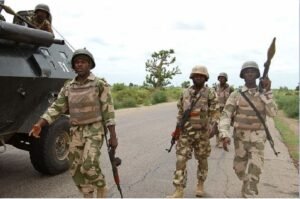
The rally came amid a broader wave of violence, including a raid on a predominantly Muslim school in Kebbi State where 30 students were taken before security forces secured their release. Analysts say criminal gangs are increasingly targeting schools for ransom, exploiting weak security structures.
The unrest has drawn international attention. US President Donald Trump has threatened military action over what he claims is the persecution of Christians by Islamist groups. Nigerian officials, however, warn that such comments oversimplify a complex conflict landscape and overlook ongoing government efforts to protect all citizens.
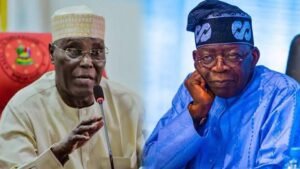
President Bola Tinubu recently declared a state of emergency and expanded police deployments nationwide as mass abductions continue to rise. Since 2014, at least 12 large-scale school kidnappings have taken place, involving more than 1,700 students — many of whom are still missing.
Parents accuse government of inaction
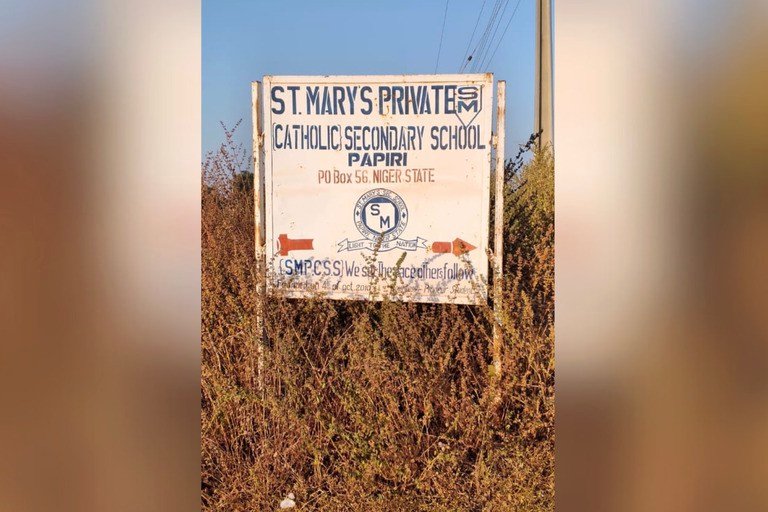
Back in Nigeria, parents of the abducted students of St Mary Catholic School, Papiri, in Niger State held their own protest on Saturday, accusing authorities of abandoning them. More than 300 pupils and 12 teachers were seized on 21 November, and eight days later, most remain in captivity.
Although around 50 children managed to escape two days after the attack, the majority are still being held. Over 200 distraught parents gathered at the school to register their details, saying no state or federal representatives had visited them since the abduction.
They carried placards reading: “Bring Back Our Girls”, “Our Girls and Teachers Are Still in Captivity”, and “Is Education a Crime?”
Rev. Fr. Stephen Okafor, the school’s Director of Communication, said officials instructed the registration, noting that some parents travelled up to four hours to take part. Another priest, Fr. Linus Arege, confirmed that 215 parents had completed the process.
Several parents accused the government of initially denying the incident.
“The truth is that my child and others were abducted,” said Joseph Dimas, whose son Julius is missing. “The government should act and come to our aid instead of saying what is not true.”
Another parent, Emmanuel Ejeh, said the school had operated safely for years without such an attack.
Catholic Bishop of Kontagora Diocese, Most Rev. Bulus Yohanna, said he remained hopeful that officials would secure the victims’ release. “It is eight days now since their abduction; we have not heard anything yet. We are still very hopeful, and we are prayerful,” he said.
The school’s Principal, Rev. Sister Felicia Gyam, and Headmistress, Blessing Amodu, described deep distress among staff and families, stressing that there had been no warning of the attack. They appealed for urgent assistance to ensure the safe return of pupils and teachers.