


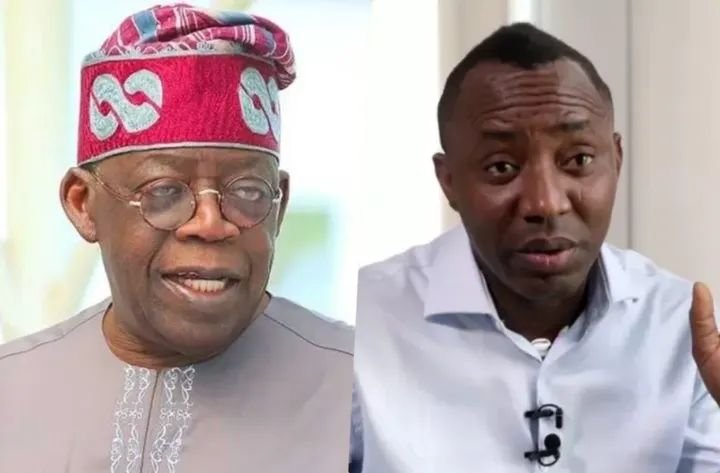
Human rights activist and pro-democracy campaigner Omoyele Sowore has declared his intention to challenge President Bola Tinubu in the 2027 Nigerian presidential election, promising sweeping reforms in electricity and security if elected.
Speaking in Abuja, Sowore said fixing Nigeria’s power sector would be a top priority of his administration, describing electricity as the foundation for economic transformation.
The activist said reliable power supply would unlock industrial growth, reduce unemployment and help tackle the country’s worsening insecurity.
“The whole idea of energy is what will bring about an industrial revolution in this country. If we get power right, we can tackle unemployment, boost GDP and address insecurity,” he said.
Sowore argued that stable electricity remains central to Nigeria’s development and insisted that meaningful progress in power generation and distribution could significantly improve economic productivity.
Criticism of Tinubu’s agenda
The founder of Sahara Reporters also criticised the “Renewed Hope” agenda of the Tinubu administration, claiming it has yet to deliver tangible improvements in the lives of ordinary Nigerians.
According to him, the country requires a new generation of leadership capable of addressing deep-rooted governance challenges and driving structural reforms.
Sowore maintained that his political ambition remains active because he continues to engage Nigerians through civic advocacy and grassroots mobilisation even outside election periods.
Track record in presidential races
The activist previously contested the presidency under the platform of the African Action Congress during the 2019 Nigerian general election and the 2023 Nigerian general election.
His campaigns focused on anti-corruption, youth empowerment and institutional accountability.
Beyond electoral politics, Sowore has remained active in civic advocacy, frequently using public campaigns and social media to highlight governance concerns and push for democratic reforms.
Political observers say his activism and media platform have played a role in shaping national debates around transparency, accountability and citizen participation in Nigeria’s democratic process.