



The Independent National Electoral Commission (INEC) has emphasized the importance of broadcast media in protecting electoral integrity, urging them to maintain fairness, professionalism, and accuracy ahead of the 2027 general elections.
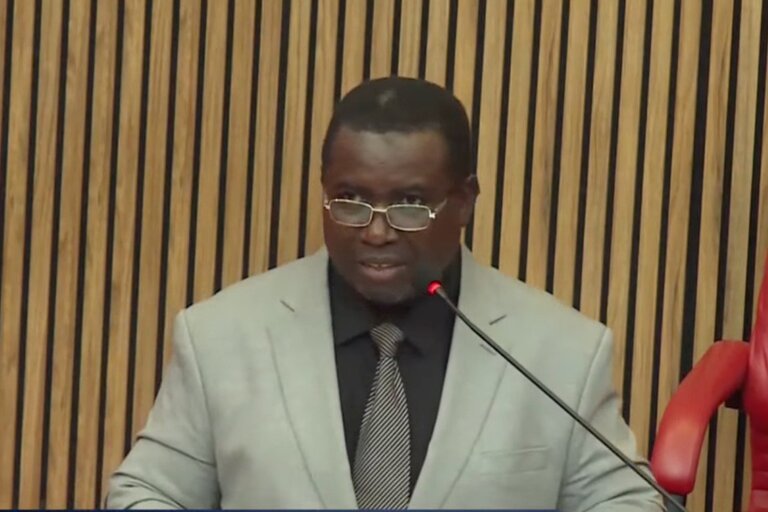
Addressing the 81st General Assembly of the Broadcasting Organizations of Nigeria on Wednesday in Abuja, INEC chairman Prof. Joash Amupitan emphasized that the management of the airwaves under the Electoral Act 2026 would be critical in building public trust and democratic outcomes.
Amupitan observed that the increasing impact of broadcast channels has made them important to political communication.
He warned, saying, “Your airwaves have become the primary infrastructure of our democracy. If they are clear, the nation sees the truth; if they are clouded by misinformation, the sovereign will of the people is threatened.”
Amupitan emphasized critical elements of the Electoral Act 2026, including those requiring equitable access to media platforms and barring abuse of state-owned media.
He clarified that “state apparatus, including the media, shall not be employed to the advantage or disadvantage of any political party or candidate at any election.”
He also stated that media time should be distributed evenly among political parties or candidates at similar times of the day.
Amupitan also warned against inflammatory political messaging, citing the law, which states that “a political campaign or slogan shall not be tainted with abusive language directly or indirectly likely to injure religious, ethnic, tribal, or sectional feelings.”
INEC also reiterated restrictions on campaign broadcasts close to election day, noting that “any person, print, or electronic medium that broadcasts, publishes, advertises, or circulates any material within 24 hours immediately preceding or on polling day commits an offense under this Act.”
While acknowledging the new law’s changes, the INEC chairman expressed concern about enforcement loopholes, regulatory overlap, and the expanding importance of digital media, warning that these issues could weaken the legal framework’s effectiveness.
He advocated for greater coordination between regulators and industry participants, proposing a partnership between INEC, BON, security agencies, and the courts to ensure compliance and accountability.
With the countdown to the 2027 elections underway, INEC revealed that “283 days remain until the presidential and national assembly elections on January 16, 2027″ and “304 days to go” before the governorship and state assembly polls.
He urged broadcasters to take decisive steps in curbing misinformation and promoting voter participation.
Amupitan charged media executives to “fact-check in real-time: Do not wait for the postmortem. Kill the fake news on your morning shows before it reaches the afternoon news.”
Amupitan also urged the media to promote civic involvement, saying, “Mobilize for voters’ turnout: A democracy experiencing voter apathy is a backsliding democracy.”
On ethical standards, he warned against putting profit ahead of public interest, saying, “Professionalism over profit: In this 2027 roadmap, the temptation to prioritize high-paying political adverts over balanced reporting will be great. I urge you to choose the sanctity of the ballot.”
Amupitan issued a harsh warning about the perils of misinformation, noting, “In the 2027 General Election, the most dangerous weapon will not be a ballot-snatcher’s gun but a smartphone-user’s lie amplified by an uncritical broadcast station.”
He encouraged broadcasters to ensure that Nigeria’s airwaves remain a safe haven for the truth, rather than a megaphone for disorder, as political parties prepare for the next election cycle.